Local roofing guide
Commercial Roofing in Tysons, VA
Rain Guard Roofs helps Tysons property owners and managers discuss commercial roof repairs, low-slope systems, coatings, and replacement planning. We operate from Sterling and start with the building’s roof records, current concern, and access requirements.
Book a free 15-minute phone consultation · Call (571) 867-1776
Start with the building—not a product
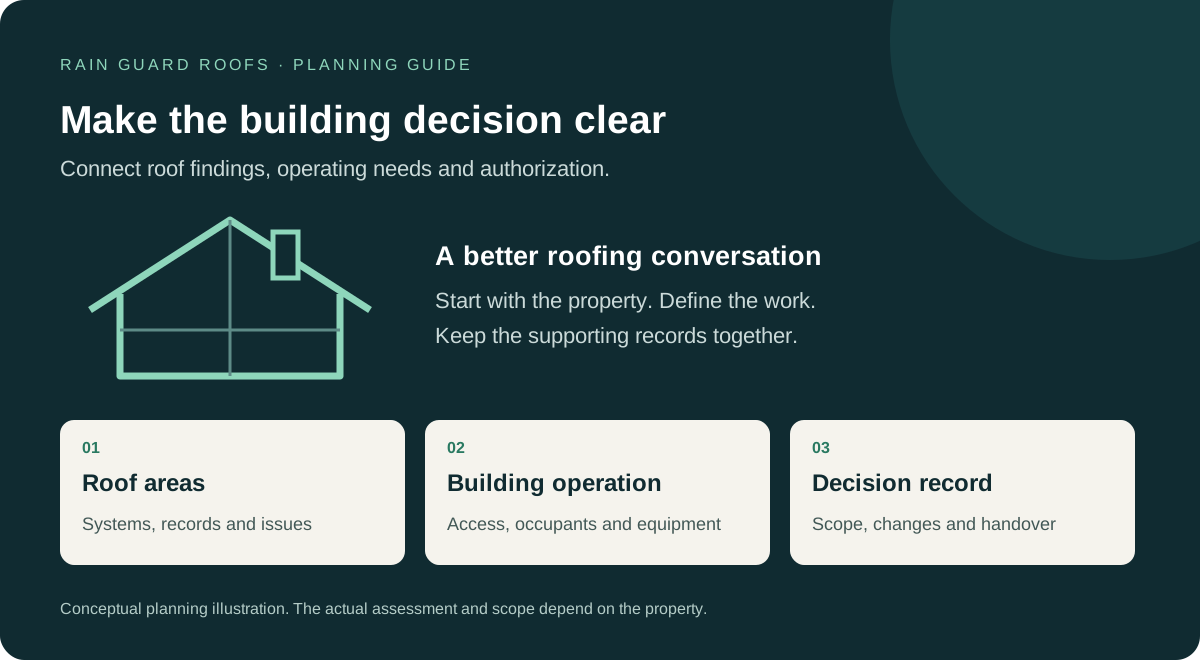
An office, retail property, or mixed-use building needs a scope that reflects how it operates. Tell us the roof system if known, the number of buildings, where leaks appear, and which occupied spaces are affected. Identify the person who controls roof access and the person who approves the work.
Tysons’ station areas—McLean, Tysons Corner, Greensboro, and Spring Hill—provide a useful way to describe the property’s location within the Tysons Urban Center. For the project itself, loading access, security procedures, and tenant activity are more important than a generic arrival-time promise.
Compare the options with evidence
| Possible path | What the evaluation should establish |
|---|---|
| Localized repair | The affected detail, repair boundary, and cause being addressed |
| Coating assessment | Existing-system compatibility, condition, preparation, and areas requiring prior repair |
| Replacement planning | Included roof areas, removal approach, related details, and occupied-building constraints |
| Phased work | Whether sections can be treated separately and how their connections are managed |
A coating should not be selected solely because it appears less disruptive. Manufacturer guidance starts with qualifying and preparing the existing roof. The actual assembly and condition must support the proposed system.
Explore our commercial roofing, flat roofing, and roof coatings services for the relevant starting points.
Make the proposal usable by the property team
A useful record identifies the building, roof area, photographs, known repair history, and proposed work. It should distinguish an active problem from longer-term replacement planning.
If several stakeholders review the project, use the same roof-area names throughout the photographs and estimate. “North roof above Suite 200” is more useful than an unexplained “Area B,” provided it matches the actual building. Keep access limitations and any areas not inspected visible in the record.
Plan around an occupied property
Discuss delivery windows, loading routes, rooftop equipment access, noise-sensitive operations, tenant entrances, and dates when work cannot occur. Any street occupancy, lifting, or specialist access needs should be established as part of feasibility; do not assume every method is included.
For a portfolio, list the buildings separately. A sound roof at one property should not inherit a replacement recommendation made for another.

Build the roof record before selecting a membrane
A property team needs more than a proposed product name. Start with the installed system if known, the roof sections involved, leak locations, drainage layout, and the maintenance history. Include warranty documents and any recent rooftop equipment work. If records are missing, identify the gaps instead of assigning a system based on how the roof looks in an aerial image.
An inspection should distinguish observed defects from conditions requiring further investigation. Wet insulation, unsuitable substrate, or concealed deterioration cannot be wished away by choosing a new surface. Ask which findings support repair, replacement, or another treatment, and what additional testing or specialist input is needed before the recommendation is firm.
Tysons' McLean, Tysons Corner, Greensboro, and Spring Hill station areas help describe a building's setting and access context. They do not establish roof height, membrane type, or the extent of commercial service needed. Provide the actual building and site arrangements when discussing work near a busy entrance or loading area.
Turn the bid comparison into an operating plan
For an occupied property, compare more than installation cost. Identify proposed work zones, access hours, material storage, removal routes, tenant notices, and coordination with rooftop mechanical equipment. Where lifting, traffic control, or another specialist is required, clarify who arranges it and whether the cost is included.
Separate immediate leak work from future capital replacement. A repair should describe its intended result and limits; a replacement proposal should explain the complete assembly and the disposition of existing materials. If a coating is proposed, require an assessment of compatibility and preparation rather than treating coating as a default low-disruption option.
Keep closeout documentation usable for the next facilities team: final scope, roof-area identification, material records, warranty requirements, photographs, and maintenance responsibilities. Our commercial roof maintenance service is relevant to ongoing planning after the immediate project, subject to the building's needs and agreed scope.
Prepare a managed-roof project brief with the building information, authorized contact and operating constraints.
Tysons roofing questions
Do you service every type of commercial building in Tysons?
Suitability must be confirmed for the particular building, roof system, height, access, and scope. Send the address and available roof information before assuming a service commitment. A Tysons service page is not a claim that every high-rise or specialist roofing project can be accepted.
Is a roof coating an alternative to replacement?
It can be considered only where the existing roof is suitable and the specified system is compatible. Ask what repairs, preparation, and condition assessment are included. A coating proposal should explain its limitations and should not conceal unresolved moisture or underlying assembly concerns.
What should our facilities team provide before the first call?
Provide the building address, authorized contact, access procedure, roof records, leak locations, and any operational restrictions. Include recent repair and rooftop equipment history. Those details help define the assessment and avoid assuming that access or work hours are unrestricted.
Can roofing work be phased around tenants?
Discuss the requirement early. Feasibility depends on the roof, work scope, safety arrangements, and available access. Ask how temporary conditions, occupied entrances, and weather interruptions will be managed. A phased plan needs a defined sequence rather than a blanket promise of no disruption.
How should we compare commercial roofing bids?
Use a common roof-area plan and compare assemblies, removal, insulation or substrate work, drainage details, access, exclusions, and warranty terms. Identify allowances and specialist work separately. The lowest total may cover a different project, so ask bidders to explain any material scope difference.
Does a recurring leak mean the membrane has reached the end of its life?
Not necessarily. Repeated water entry may involve a specific detail, drainage issue, previous repair, or a wider condition. Ask for findings that distinguish those possibilities. A replacement recommendation should explain why a more limited approach is unsuitable for the actual roof.
Discuss your building’s next step
Book your free phone consultation. Nearby coverage includes McLean, Vienna, and Fairfax County.
Talk through your roof