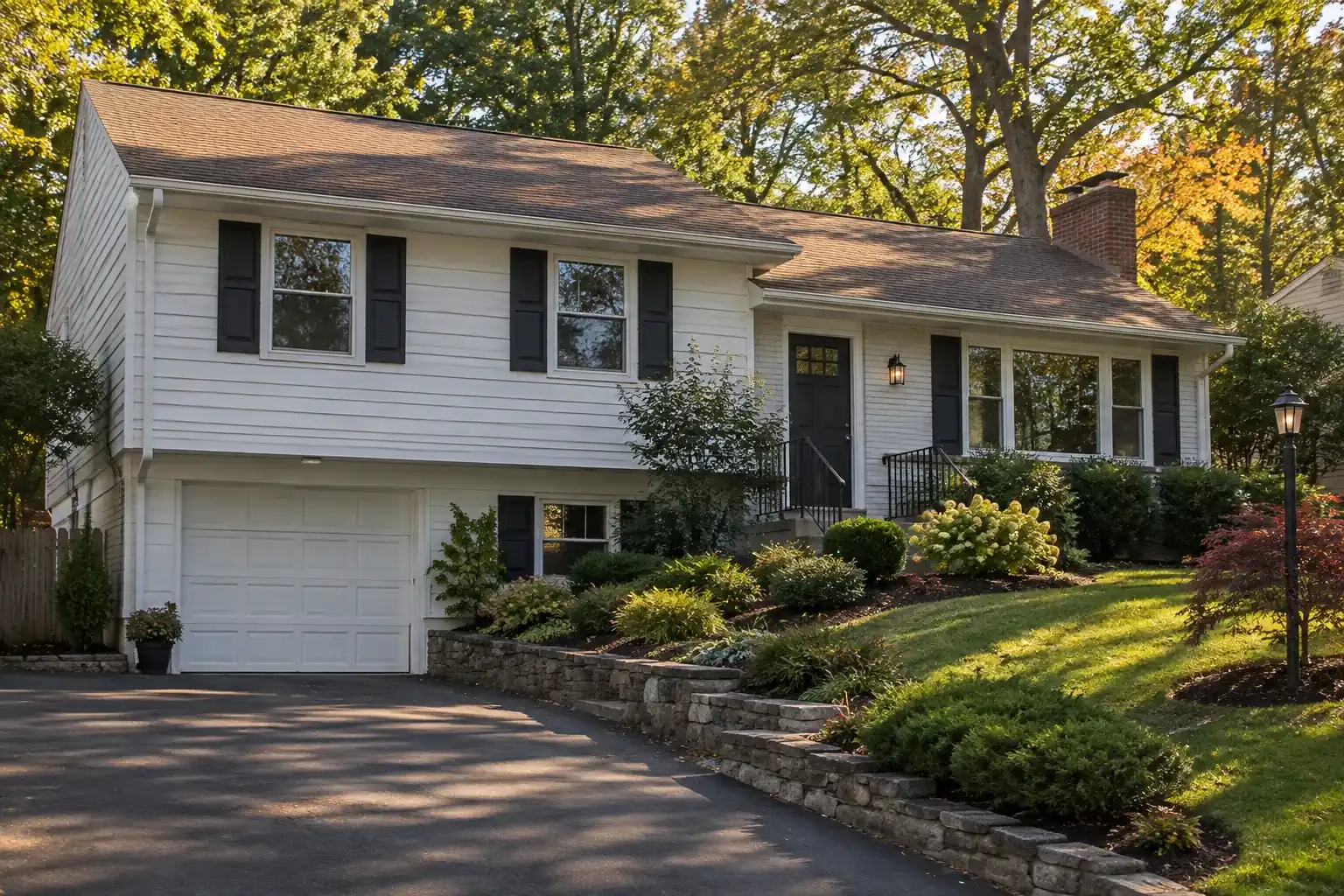
A Fairfax County roof replacement should be planned from a measured, written scope—not a ZIP-code average. Rain Guard Roofs does not publish a local price range without current job data. Your roof’s surface area, pitch, material, tear-off, access, flashing, and underlying deck condition determine the number.
Permitting information in this guide is based on Fairfax County Land Development Services’ public Residential Miscellaneous permit guidance. County requirements can change and may depend on the property and scope; confirm the current requirements before scheduling work.
Start with a price you can compare
Search results make a roof replacement look simple: enter a home size, get a number, and decide whether it fits the budget. That approach can be useful for forming questions, but it cannot account for the roof over your Fairfax County home. Floor area is not roof area. A one-story ranch, a two-story colonial, and a townhome can have similar interior square footage while needing very different roofing scopes.
A usable estimate identifies the roof area being priced, the material system, tear-off assumptions, flashing work, ventilation, disposal, site protection, and the conditions that could change the scope. It also separates known work from work that cannot be confirmed until the roof is opened. That clarity is more useful than a low headline total that leaves important work undefined.
Cost planning by home size
The table below is a decision tool, not a price list. It shows why home size alone cannot produce a trustworthy replacement number. Ask for the measured roof surface and the scope assumptions behind any estimate you receive.
| Approximate home size | Why it is not the roof size | What a written scope should confirm |
|---|---|---|
| 1,500 sq ft | Garages, overhangs, pitch, and additions can add roof surface beyond the living area. | Measured roof area, tear-off layers, access route, and roofline details. |
| 2,500 sq ft | Two floors may reduce the footprint, while dormers, valleys, and attached garages can add complexity. | Stories, safety setup, flashing transitions, and material system. |
| 3,500 sq ft | Large homes vary widely in footprint and roof geometry; floor area is especially unreliable here. | Roof measurements, specialty details, deck allowances, and disposal plan. |
Before accepting an online estimate, compare it with a roof replacement scope built around your actual roof. If the totals differ, compare the included work line by line instead of assuming one contractor is simply more or less expensive.
Cost by material: compare the whole system
Material affects the budget, but it is only one part of a replacement. The product chosen, installation details, roof slope, flashing, ventilation, and drainage conditions matter as well. A proposal should identify the exact material rather than using broad labels that make comparison difficult.
| Material | Where it may fit | Budget question to ask |
|---|---|---|
| Architectural asphalt shingles | Most sloped residential roofs | Which shingle, underlayment, flashing, and accessory details are included? |
| Standing-seam metal | Selected rooflines and long-term ownership plans | How are transitions, penetrations, and trim details being handled? |
| Composite shake | Homes seeking a shake-style appearance | What system-specific installation and accessory requirements apply? |
| Slate | Existing slate homes and select specialty projects | What structural and specialty-labor considerations need review? |
| TPO or EPDM | Low-slope sections, additions, and flat roofs | How do drainage, seams, edges, and penetrations shape the scope? |
Rain Guard Roofs’ roofing materials guide is a helpful place to compare the role of each system before deciding based on an initial price alone.
What drives your price up
Pitch and height. A steep or high roof takes more safety setup and slower movement than a walkable one. A taller home can also change ladder, staging, and material-handling needs. Those differences should appear in the scope rather than as a vague surcharge after work begins.
Existing layers and tear-off. Removal is not just a labor item. It affects debris, disposal, protection of the property, and what can be seen underneath. If a proposal assumes one layer, ask how additional layers would be handled if they are found.
Decking condition. Roof decking is normally visible after roofing materials are removed. A complete proposal should explain how necessary deck replacement would be authorized and state a per-sheet unit price or allowance before work starts. Rain Guard Roofs does not publish that rate here because it must be current and specific to the project; it should be shown in writing on your estimate.
Access, story count, and protection. Tight side yards, townhome layouts, landscaping, long carry distances, and close neighboring properties can change how materials and debris move through a job. Site protection and cleanup should be explained in the written plan.
Roof complexity and shingle tier. Valleys, dormers, skylights, chimneys, walls, and vent penetrations each require detail work. The shingle or material tier also changes the material portion of the price. Neither is a reason to accept an unclear total: the estimate should name the work and the products involved.
Fairfax County housing stock and why it changes cost
Fairfax County does not have one roof type or one replacement condition. The county includes older inner suburbs, planned communities, townhome neighborhoods, and newer development patterns. The neighborhood is not a fixed price category, but the home’s age, design, access, and association requirements can shape what needs to be measured and discussed.
Post-war inner suburbs. Homes in established communities may have additions, changed rooflines, mature landscaping, or previous repairs that are not obvious from the street. A scope should account for the current roof configuration rather than assume it matches the original house plan.
1960s–1970s Reston. Many Reston homes are part of planned neighborhoods where exterior changes can involve association review. A roof proposal should leave time to verify color and product requirements. See Rain Guard Roofs’ Reston roofing service page for local service information and start approval questions early rather than after materials are ordered.
1980s–2000s Chantilly and Centreville development. These areas include varied single-family homes, townhomes, and community-managed properties. Rooflines, shared access, driveway layout, and association rules can differ substantially from one block to the next. For homeowners in the western part of the county, the Chantilly roofing page explains how to begin the local conversation.
For countywide coverage and consultation details, visit the Fairfax County service-area page. The best question is not “what does a roof cost in this neighborhood?” It is “what does this roof require, and is that requirement documented?”
Fairfax County permits and disposal
Fairfax County Land Development Services lists “Re-Roof/Re-Line” and “Roof Repair” under its residential miscellaneous permit guidance. The county says permit requirements depend on the work’s scope and directs applications through the Planning and Land Use System (PLUS). Its guidance also notes that other approvals can apply depending on the property and project.
That does not mean every roof project has identical paperwork. Confirm the current requirement for the exact address, property type, and scope before scheduling. A responsible scope should make clear who is handling any applicable permit process and what documentation the homeowner will receive.
Disposal deserves the same attention. Ask where old roofing material, nails, packaging, and debris will go; how landscaping and hard surfaces will be protected; and how additional layers affect the plan. A replacement proposal is easier to compare when tear-off and disposal are included instead of appearing as an undefined extra.
Insurance versus out-of-pocket replacement
Insurance can be part of the conversation after a potentially covered event, but it is not a replacement plan by itself. Coverage depends on your policy, the cause of damage, the insurer’s inspection, and the insurer’s decision. Rain Guard Roofs can document visible conditions and provide a construction scope, but cannot promise approval or tell you what an insurer will decide.
For a roof that is worn, nearing the end of its serviceable condition, or being replaced for planning reasons, the decision is usually an out-of-pocket budgeting conversation. In either case, the same discipline helps: understand what the roof needs, get the scope in writing, and keep the insurance and construction decisions separate.
Financing a planned replacement
Financing is easiest to evaluate after you know the actual project amount. Start with an inspection and written scope, then consider the payment options that fit your situation. Rain Guard Roofs’ roof financing information explains the process and provider handoff. Terms, approval, and available offers are determined by the lender and individual application, not by a blog article.
Read the scope before focusing on a monthly payment. Confirm what is included, what could change after tear-off, and what documentation you will receive. That order helps you make a decision about a known project rather than a rough online number.
When a repair is enough
Replacement is not automatically the right answer. A repair can be a sensible option when the problem is isolated, surrounding materials remain serviceable, and a compatible repair can resolve the source of water entry. The condition of flashing, penetrations, attic evidence, the wider roof surface, and prior repair history all matter.
Start with Rain Guard Roofs’ roof repair service information if you are dealing with a focused issue. Then use the roof repair versus replacement guide to frame the inspection questions that separate a repairable defect from a larger planning decision.
Questions homeowners ask
What does a roof replacement cost in Fairfax County?
A reliable local price requires a measured inspection and written scope. Roof surface area, pitch, tear-off, material, flashing, access, and any deck repairs all affect the final project amount.
Do I need a permit for a reroof in Fairfax County?
Fairfax County Land Development Services lists reroofing and roof repair in its residential miscellaneous permit process. Requirements can vary by property and scope, so confirm the current requirement for the address before work is scheduled.
Will homeowners insurance cover a new roof?
Coverage depends on the policy, the cause of damage, inspection findings, and the insurer’s decision. A roofing contractor can document observed conditions, but cannot promise a claim result.
Can I repair my roof instead of replacing it?
Often, when the issue is isolated and the surrounding roof remains serviceable. An inspection should evaluate the source of the problem, material condition, flashing, and whether a compatible repair will solve it.
Keep planning
Related roofing guides
Cost guide
Roof Replacement Cost in Loudoun County
Compare the questions that turn broad planning figures into a complete local roof scope.Read the guide
Estimate guide