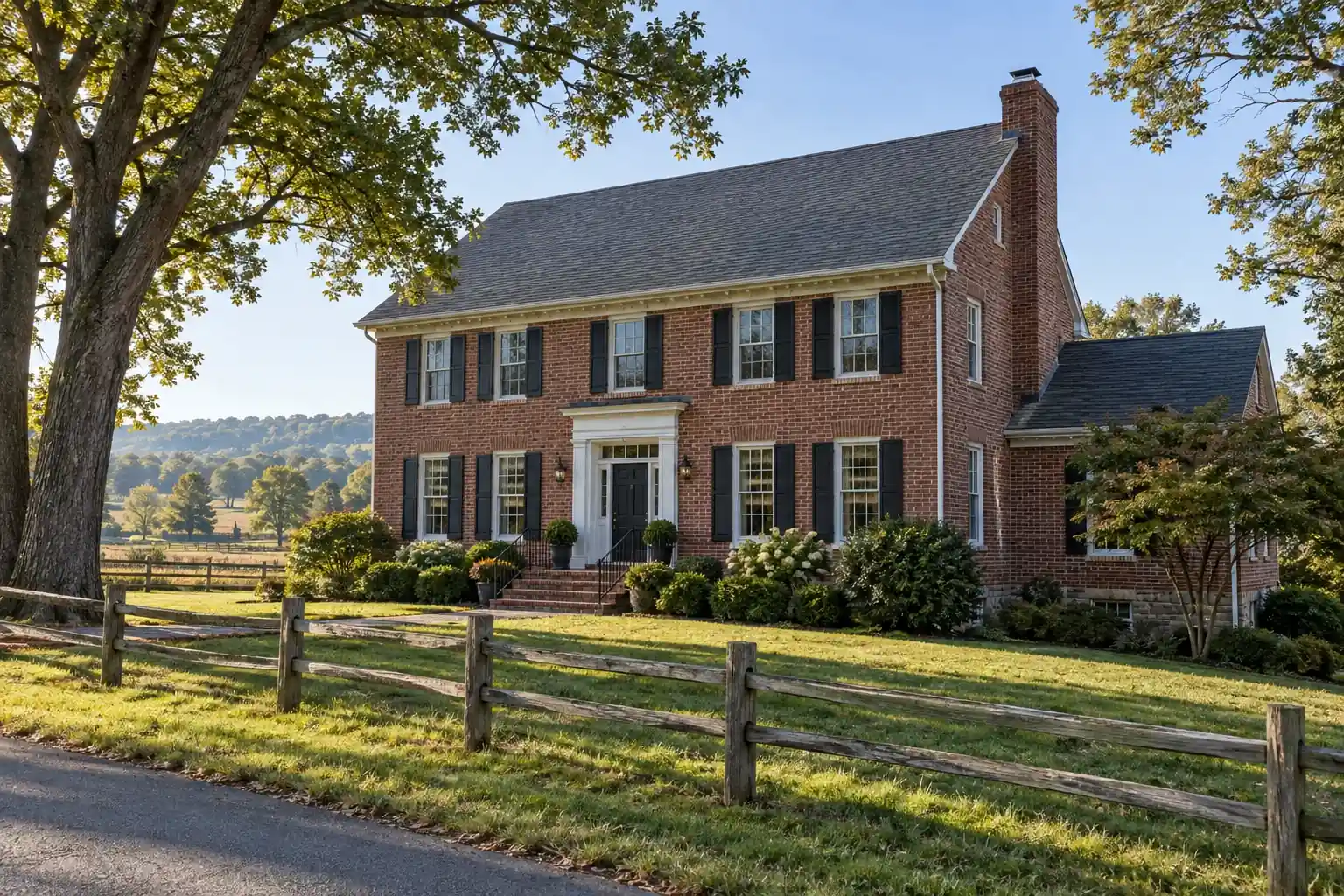
Published Virginia consumer data places roof replacements in a broad $6,774–$19,409 planning range. That is not a Rain Guard Roofs quote or a Loudoun County price list: the final number depends on roof surface area, design, materials, tear-off, deck repairs, site access, and local requirements.
Planning figures are from This Old House’s Virginia cost guide, updated May 2026. Use them to frame questions—not to replace an inspection.
Cost planning by home size
A home’s floor area is only a starting point. Roof surface is usually larger because of pitch, overhangs, attached garages, and dormers. The figures below are statewide published averages for comparison, not a local bid and not a promise of a project price.
| Home size | Typical stories in source data | Published Virginia planning average | What changes the local scope |
|---|---|---|---|
| 1,500 sq ft | 1 | $9,112 | Roof pitch, garage area, and tear-off depth |
| 2,500 sq ft | 2 | $10,390 | Surface area, access, valleys, and dormers |
| 3,500 sq ft | Varies | Request a measured local scope | Roof footprint and complexity matter more than floor area alone |
Cost by material
Material is part of the decision, but it is never the only cost driver. A written scope should name the exact product system, accessory work, tear-off, flashing work, ventilation, and disposal rather than grouping them under a vague “roof” line item.
| Material | Where it commonly fits | Budget conversation |
|---|---|---|
| Architectural asphalt shingles | Most pitched residential roofs | Usually the baseline comparison |
| Standing seam metal | Long-term ownership plans and selected rooflines | Higher up-front material and detail labor |
| Composite shake | Homes seeking a cedar-like profile | Premium material choice with system-specific details |
| Slate | Appropriate existing slate homes and select designs | Specialty labor and structural considerations |
| TPO or EPDM | Low-slope sections, additions, and flat roofs | Priced by membrane system, drainage, and detail conditions |
See the material trade-offs in Rain Guard Roofs’ roofing materials guide before choosing a product based only on the lowest initial number.
What drives your price up
Pitch. A steep roof needs slower movement, more safety setup, and more labor than a walkable slope. Existing layers. Removing more than one roofing layer adds labor, debris, and disposal. Decking condition. The deck is exposed only after tear-off, so a fair quote identifies a per-sheet price in advance rather than adding an undefined allowance.
Access and story count. A tight townhouse site, long material carry, or taller home may require more staging and protection. Valleys and dormers. Every valley, skylight, chimney, wall transition, and dormer creates flashing and detail work. Shingle tier. Product selection affects material cost, but it should be compared alongside the complete installation system.
Why the same house costs differently in Sterling, Ashburn, Leesburg, and Purcellville
Neighborhood does not create a fixed price tier, but site conditions vary. A Sterling townhome can have restricted access and close neighboring property to protect. A newer Ashburn community may have architectural-review requirements for color or product selection. Leesburg and Purcellville properties may have longer material routes, larger lots, or more complicated drive access. The useful question is not “what does a roof cost in this ZIP code?” It is “what work does this property require?”
Explore the local service pages for Loudoun County, Sterling, and Ashburn for area coverage and consultation details.
Permits and disposal costs
Loudoun County’s Department of Building and Development oversees building permits in the county, while incorporated towns can require separate approvals. Current requirements depend on the address and scope, including whether structural work is involved. Confirm the current requirement before a project is scheduled; a legitimate scope should state who is handling applicable paperwork.
Disposal also belongs in the written scope. Ask how old roofing, nails, packaging, and site protection are handled, and ask what happens if additional layers are found. A low headline figure that omits tear-off or disposal is not an apples-to-apples comparison.
Insurance vs. out-of-pocket replacement
Insurance may be relevant after a covered loss, but an insurer determines coverage under the policy and its own inspection process. Avoid treating a contractor’s first visit as an approval. What a roofing inspection can do is document observable conditions, separate a maintenance issue from suspected storm-related damage, and provide a clear repair or replacement scope. For a known replacement project without a covered loss, the decision is generally an out-of-pocket planning and financing conversation.
Financing a replacement
Start with a documented scope before considering financing, so the application is based on a real project amount rather than an online guess. Rain Guard Roofs’ financing page explains the conversation and next steps. Terms, approval, and available options depend on the lender and the individual application; ask for details in writing.
When a repair is enough
Replacement is not the automatic answer. A targeted repair may make sense when the problem is isolated, the remaining roof is still in good condition, and the repair can solve the water-entry path. Age alone does not decide it; neither does a missing shingle after a storm. A close inspection should consider the condition of the surrounding roof, flashing, penetrations, attic evidence, and the availability of a compatible repair.
For that decision, start with roof repair and roof replacement information, then request a documented review of your specific roof.
Questions homeowners ask
What does a roof replacement cost in Loudoun County?
A replacement is best planned from a local inspection and written scope. Published statewide Virginia planning data reports a broad $6,774 to $19,409 range, but roof area, pitch, material, access, tear-off, and deck condition can move a Loudoun County project well outside a generic average.
Do I need a permit to replace a roof in Loudoun County?
Loudoun County Building and Development oversees permitting, but requirements depend on the property location and project scope. Incorporated towns can have separate approvals. Confirm the current requirement for the address and scope before scheduling work.
Will insurance pay for a new roof?
Coverage depends on the policy, cause of damage, inspection findings, and the insurer’s decision. A contractor can document observed roof conditions, but cannot promise a claim outcome.
When is a roof repair enough?
A repair may be appropriate when damage is isolated, the surrounding roof is still in serviceable condition, and a matching repair can solve the source of the problem. A measured inspection is the right way to decide.
Keep planning
Related roofing guides

Estimate guide
Why Roofing Quotes Vary by $10,000
Compare the scope, material details, allowances, and assumptions behind a roof quote.Read the guide
Roof decisions