How Much Does Roof Repair Cost in Northern Virginia?
Most common roof repairs in Northern Virginia cost roughly $250 to $1,800. Structural damage can raise the repair to $1,500–$7,000 or more. The visible symptom is only one part of the estimate: access, roof design, material availability, and conditions beneath the shingles can matter just as much.
These are 2026 planning estimates based on current Northern Virginia and Virginia market pricing. They are not a substitute for an inspection or a Rain Guard Roofs project quote. A small repair on an accessible, straightforward asphalt-shingle roof may fall near the bottom of a range. Steep access, flashing reconstruction, wet decking, discontinued shingles, or structural damage can move the cost considerably higher.
If you have an active leak or visible damage, begin with a free roof inspection. The repair scope should be based on the actual entry point, not simply on the location of the ceiling stain.
Roof Repair Cost by Problem in Northern Virginia
The table below is intended for early budgeting. It assumes a typical residential asphalt-shingle roof and ordinary working conditions. Specialty materials, steep roofs, difficult access, extensive interior damage, and unusually large repair areas may fall outside these ranges.
| Repair | Typical 2026 planning range | Usually done in |
|---|---|---|
| Pipe boot replacement | $250–$650 | Same day |
| Flashing repair | $400–$1,400 | Same day to 1 day |
| Shingle section replacement | $350–$1,200 | Same day to 1 day |
| Valley repair | $650–$1,800 | 1–2 days |
| Ridge vent repair | $450–$1,200 | Same day to 1 day |
| Emergency tarping | $300–$800 | Same day |
| Structural or sagging repair | $1,500–$7,000+ | 1–3+ days |
A price near the low end generally means the issue is localized and accessible, with no damage extending into the roof deck or framing. Higher-end work more often involves a larger area, complex roof intersections, difficult access, multiple layers that must be opened, or damage that becomes visible only after the roof covering is removed.
When comparing estimates, ask more than “What does roof repair cost?” Ask, “What exactly is included in this repair?” A $400 quote to apply sealant over a flashing joint is not equivalent to a $1,200 quote that removes nearby shingles, replaces deteriorated flashing, restores the water-shedding detail, and integrates new material into the existing roof.
Pipe Boot Replacement: About $250–$650
Plumbing vents pass through the roof and rely on a boot or collar to keep water out. As the sealing material ages, it can crack or separate and create a concentrated leak.
When the surrounding shingles and decking remain sound, pipe boot replacement is usually one of the simpler Northern Virginia roof repairs. The cost can increase if the vent sits on a steep or hard-to-reach section, or if water has damaged the deck around the penetration.
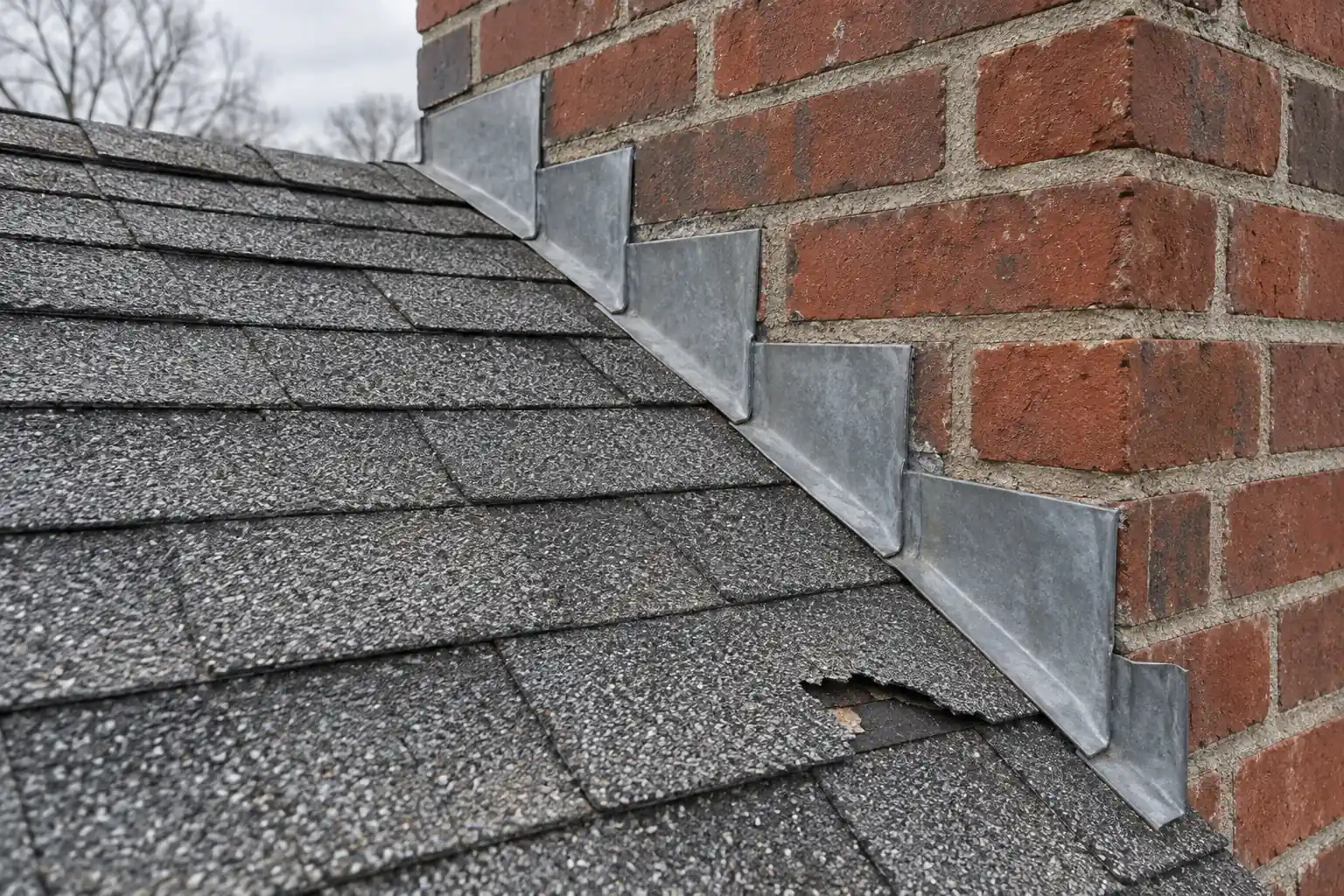
Flashing Repair: About $400–$1,400
Flashing protects vulnerable roof transitions around chimneys, walls, dormers, vents, skylights, and other penetrations.
The broad range reflects the difference between a small localized correction and rebuilding an improperly installed or deteriorated flashing assembly. Proper work may require removing nearby shingles so replacement metal can be integrated into the roof rather than simply sealing the exposed surface.
Shingle Section Replacement: About $350–$1,200
Replacing several missing or damaged shingles is generally straightforward when matching material is available and the underlying deck is dry.
The scope becomes more involved when damage crosses several courses, surrounding shingles are brittle, or the original product is difficult to match. On an older roof, the practical repair area can therefore be larger than the few shingles that first appear damaged.
Valley Repair: About $650–$1,800
Valleys collect water from two adjoining slopes, so a failure there deserves careful diagnosis.
A limited repair may correct damaged shingles or a localized water-shedding detail. More extensive valley work can require opening both sides, replacing underlayment or flashing, correcting damaged decking, and reinstalling shingles over a substantially larger section.
Ridge Vent Repair: About $450–$1,200
A damaged ridge vent may involve loose or missing ridge-cap material, failed fasteners, cracked vent components, or wind damage along the roof peak.
Cost depends heavily on how much of the ridge must be opened and whether the problem is limited to the roof covering or extends into the ventilation assembly beneath it.
Emergency Tarping: About $300–$800
Tarping is temporary stabilization, not a permanent repair. It can be useful after storm damage, a fallen branch, missing roof material, or another opening that allows water into the home before permanent work can safely proceed.
Roof size, pitch, height, weather, accessibility, and the area needing protection all affect the emergency cost. If water is actively entering the property, see Rain Guard Roofs’ emergency roof repair information rather than waiting for a routine appointment.
Structural or Sagging Repair: About $1,500–$7,000+
Sagging changes the nature of the problem because it may no longer be limited to the roof covering.
Damaged decking, rafters, trusses, or other structural components can require carpentry as well as roofing. A photograph of the exterior alone cannot responsibly establish the final scope. The moisture source, extent of deterioration, and affected structural components must be identified first.
What Makes a Small Repair Get Expensive?
An issue that looks minor from the ground can become a larger repair once the roof is opened. Two conditions explain many of these surprises.
Hidden Decking Rot
Shingles conceal the roof deck, so the condition of the wood beneath them is not always visible before work starts.
A pipe boot may look like the obvious problem while repeated water intrusion has already softened or deteriorated the sheathing around it. Once affected shingles are removed, damaged decking should not simply be covered again.
That is why two homes with apparently identical leaks can receive very different estimates. One may need a boot and a small shingle tie-in; the other may need that same exterior repair plus removal and replacement of damaged decking. A written estimate should explain how unexpected decking will be handled if it becomes visible after the roof is opened.
Water Can Travel Away From the Entry Point
A bedroom ceiling stain does not necessarily identify the roof opening directly above it. Water entering through flashing, a vent, a valley, or another opening can travel along roof sheathing, framing, fasteners, insulation, or other building components before appearing inside.
That is why leak work should begin with diagnosis. Patching the roof directly above the stain fixes the symptom only when the exterior entry point happens to be there. A useful inspection considers interior evidence, accessible attic conditions, and roofing components above and upslope from the affected area.
Tracing the actual water path can make the first repair more involved, but it is preferable to repeatedly paying to patch the wrong location.
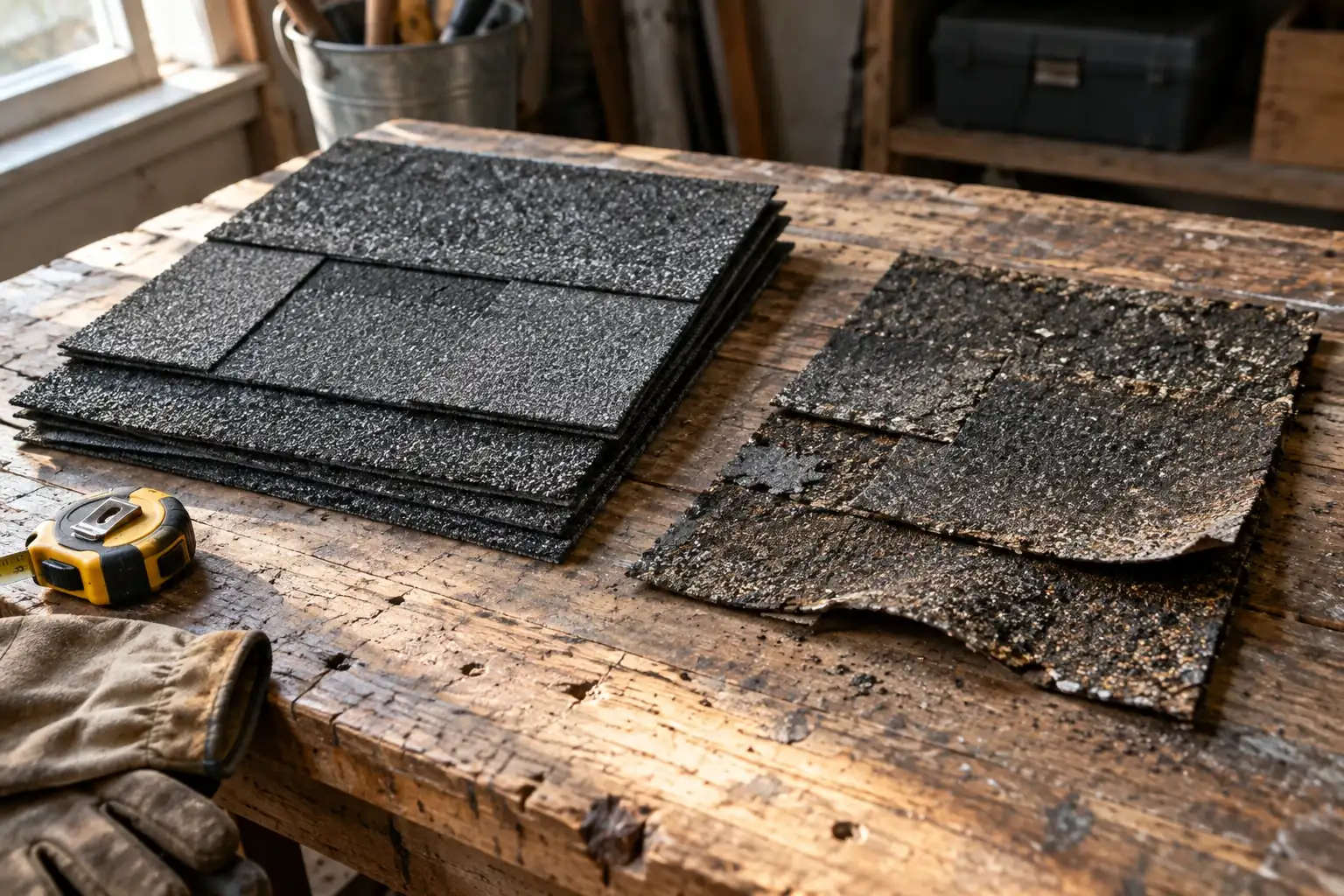
Matching Discontinued or Weathered Shingles
Shingle matching can turn an otherwise simple repair into a more involved decision. Manufacturers change product lines and colors, so an older shingle may no longer be available in the same profile or color. Even when the named color remains available, years of weather exposure can make new material look noticeably different beside the existing roof.
That does not automatically mean the entire roof needs replacement. It does mean you should know before work begins whether the repaired section is likely to be visible from the ground and whether acceptable compatible material can be sourced.
On a hidden rear slope, a close visual match may be acceptable. On a prominent front roof plane, appearance may carry more weight. The technical condition of the existing shingles matters as well: if they are brittle enough that lifting them for a normal repair causes additional damage, a small planned patch can expand.
Why Roof Pitch, Height, and Access Change the Price
Materials are only part of a repair estimate. A technician can generally perform the same basic work more efficiently on an accessible one-story roof than on a steep two- or three-story section requiring additional fall protection, equipment, setup, or staging.
Complex rooflines add labor too. Dormers, valleys, chimneys, sidewalls, intersecting slopes, skylights, and tight work areas mean more components must be removed carefully and tied back together.
A useful estimate therefore describes the scope, not just the final dollar amount. Before accepting a quote, look for:
- the area being repaired;
- the component believed to have failed;
- what material will be removed;
- what will be installed;
- how damaged decking will be handled if discovered;
- whether matching shingles are available; and
- whether cleanup and disposal are included.
Those details make it easier to compare estimates fairly.
The 25% Rule
You may hear roofers refer to a “25% rule” when discussing repair versus replacement. It is important to separate a financial decision rule from a building-code rule.
There is no general Virginia rule saying that reaching 25% automatically requires the entire roof to be replaced. Virginia roofing repairs and reroofing are governed by applicable Virginia building codes and local enforcement; the 25% figure should not be presented as a universal statutory replacement trigger.
Instead, 25% can serve as a budgeting checkpoint. If a proposed repair approaches roughly one-quarter of the realistic cost of replacing the roof, compare both options carefully before spending the money.
For example, an older roof may have:
- a significant valley failure;
- several areas of deteriorated decking;
- shingles that are difficult to match;
- another known leak on a different slope; and
- a repair estimate becoming a substantial percentage of replacement cost.
A technically possible repair may still exist. The better financial decision may be to put that money toward complete roof replacement in Northern Virginia instead of repairing one area of a roof likely to need more work soon.
The opposite is also true. If the roof is otherwise healthy and the work involves one isolated pipe boot, flashing detail, or small shingle section, replacement may be unnecessary. Spending several hundred dollars to correct a localized problem can make more sense than replacing thousands of square feet of functional roofing.
A Better Repair-vs.-Replacement Test
Rather than relying on one percentage, consider these five questions:
| Question | Repair is more attractive when… | Replacement deserves consideration when… |
|---|---|---|
| Is the damage localized? | One clearly defined area is affected | Problems exist on several slopes or components |
| What condition is the decking in? | Decking around the repair is sound | Moisture damage extends beyond the visible problem |
| Can the existing roof be worked on safely? | Surrounding shingles remain flexible and serviceable | Shingles crack or break during normal repair work |
| Can replacement material be matched? | Compatible material is readily available | Product/profile is discontinued or mismatch is significant |
| How does repair cost compare with replacement? | Repair is a small fraction of replacement cost | Repair becomes a major investment in an aging roof |
If the answer remains unclear, a documented inspection usually provides more useful information than deciding from roof age alone.
Does Location Within Northern Virginia Affect Repair Cost?
For most routine repairs, the problem itself matters more than whether a home is in Sterling, Ashburn, Leesburg, Reston, Vienna, or Fairfax.
Location matters indirectly through property characteristics. An older home surrounded by mature trees may have different access and roof-condition issues from a newer subdivision home. Large estate roofs may have greater height, steeper sections, multiple valleys, premium materials, or more complex roof planes.
Rain Guard Roofs is based in Sterling and serves nearby Northern Virginia communities, including roofing in Loudoun County and surrounding service areas. The most accurate budget is therefore based on the specific roof and repair, not on an assumption that every homeowner in a ZIP code pays the same amount.
Frequently Asked Questions
How much does a typical roof repair cost in Northern Virginia?
For 2026 planning, many localized Northern Virginia repairs fall between about $250 and $1,800. Pipe boots and limited shingle work generally sit toward the lower end; valleys and substantial flashing repairs usually cost more. Structural or sagging repairs can reach $1,500–$7,000 or more depending on what is damaged.
Can a leaking roof be repaired without replacing the whole roof?
Yes. A localized leak from a pipe boot, flashing detail, small shingle section, vent, or similar isolated failure can often be repaired without replacing the entire roof when the surrounding system remains serviceable. An inspection should establish the source and the condition of surrounding materials first.
How long does a roof repair usually take?
Many localized residential repairs can be completed the same day. Valley reconstruction, larger shingle sections, decking replacement, or structural repairs may take one or more days. Weather, access, material availability, and hidden damage can change the schedule.
When should I replace instead of repair?
Consider replacement when damage is widespread, multiple recurring problems exist, surrounding shingles can no longer be repaired reliably, significant decking deterioration is present, matching material is unavailable, or repair becomes a substantial percentage of a realistic replacement quote. The 25% figure is a financial checkpoint, not an automatic Virginia code trigger.
Get a Repair Scope Before You Decide
A roof repair price is useful only when you know what the contractor is repairing.
Rain Guard Roofs can inspect the affected area, identify the likely source, and provide a scope based on what is actually happening on the roof.
Call Rain Guard Roofs at (571) 867-1776 or book your free inspection to discuss a Northern Virginia roof problem.
Keep planning
Related roofing guides
Roof decisions
Roof Repair vs. Replacement: How to Decide
Compare repairability, recurring issues, materials, and overall roof condition.Read the guide
Estimate guide