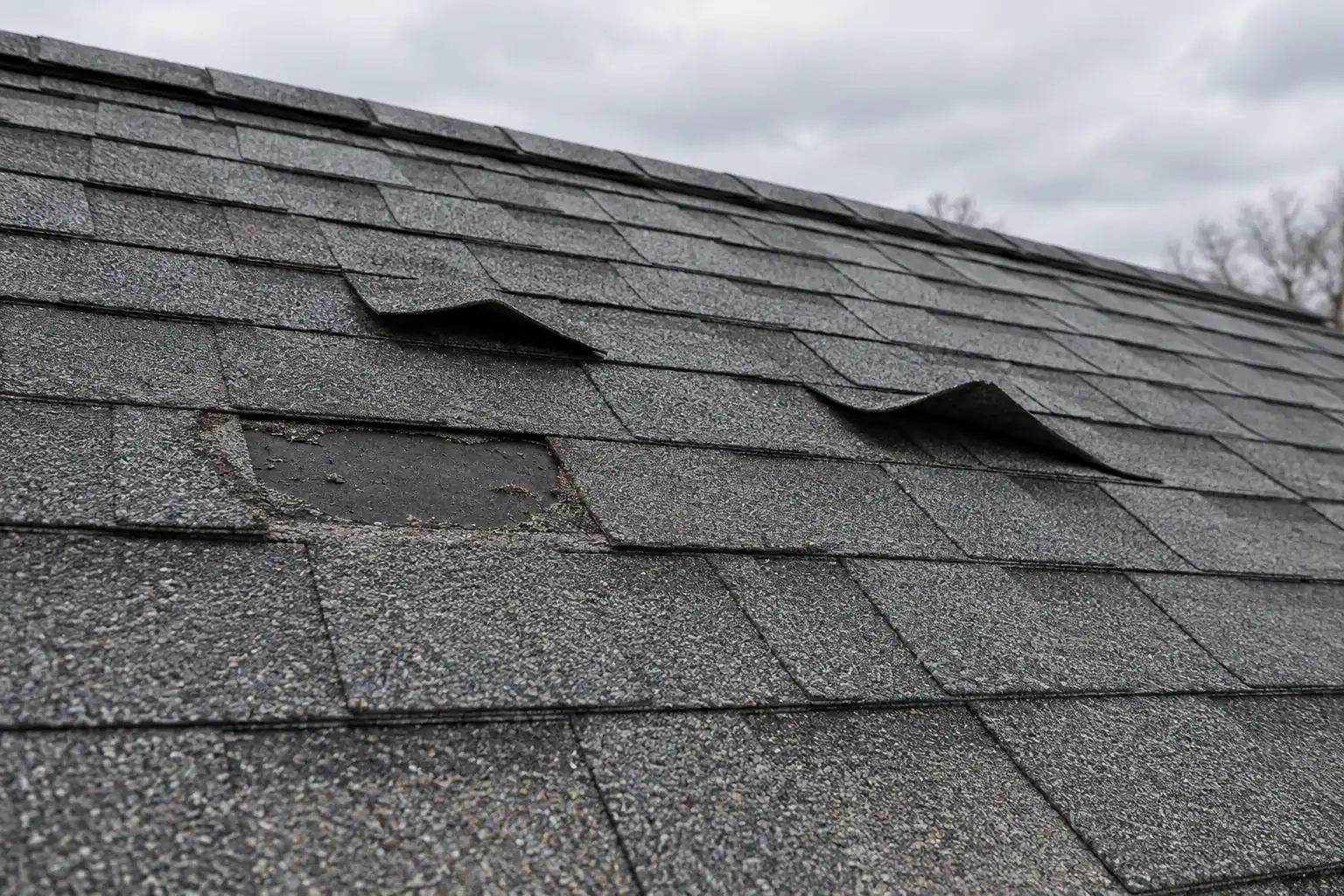
What Wind Damage Looks Like
Wind can bend, tear, or remove asphalt shingles. A crease along a fold line may show where a tab bent back, while a missing tab leaves a break in the roof covering. GAF identifies raised shingles, tab creases, and missing shingles as signs worth investigating in its guide to wind-damaged shingles.
A professional inspection should record the location and condition of any crease, torn material, or displaced shingle. Ask the inspector to distinguish the visible damage from the conclusion about its cause. A photograph can show a fold clearly without establishing exactly when or how that fold developed.
Lifted tabs and broken seal-strip bonds also deserve attention, but an unsealed shingle alone does not prove a recent wind loss. Seal condition, installation details, and the surrounding shingles provide context. A useful report explains those observations instead of labeling every loose tab as storm damage.
Wind-related loss may cluster along exposed edges or on slopes facing the wind. That distribution can help guide an inspection, but it is not a boundary beyond which wind damage cannot occur. Ask for observations from all accessible roof areas rather than a conclusion based only on the front slope.
Missing shingles may expose the underlayment beneath them. Treat that opening as a reason to arrange professional weather protection and inspection, even if the ceiling still looks dry. From safe ground, photograph visible gaps, displaced material, and debris; leave close examination and any roof access to a professional.
When arranging a storm damage roof inspection, ask what written findings and photographs will be available. Clear documentation should identify what the inspector could see and any areas that could not be assessed safely.
What Wear and Tear Looks Like
Wear develops over time and may show up as curling edges, cupped tabs, cracking, and loss of protective granules. When similar changes appear across broad roof areas, gradual deterioration becomes an explanation to investigate. Appearance alone still cannot assign a date or rule out separate storm damage.
GAF lists cracking, curling, and excessive granule loss among the signs that a roof needs attention in its roof-condition guidance. It also notes that shingles do not have one fixed expiration date. The installation year provides background, while an inspection describes the material's present condition.
Do not assume every grain found near a downspout came from a damaging storm. GAF's steep-slope field guide describes several causes of granule loss, including natural weathering and roof traffic. Ask whether the roof has scattered loose granules, visible bare patches, or another identifiable condition.
Algae streaking belongs in a different category from a torn or missing shingle. The Asphalt Roofing Manufacturers Association describes algae discoloration as an aesthetic issue in its spring inspection guidance. A dark streak alone is not evidence of wind damage, although a roof can have staining and a separate physical defect.
Keep older repair invoices and inspection photos even when they record a problem. They help establish what was already present. A complete history is more useful than a collection that leaves out inconvenient details or presents old photographs as evidence of a new event.
The Pattern Rule
Sudden, concentrated damage and gradual, widespread change are useful starting points for comparison. They are not a dependable yes-or-no test. Treat the pattern as a question to investigate alongside the material condition and timeline, not as proof of an insurance outcome.
The Insurance Institute for Business & Home Safety's roof research explains that wind pressures vary across a roof and that aging can weaken shingle seals. It also describes differences in sun exposure between roof orientations. These findings support caution: wind damage need not stay on one windward slope, and weathering need not look identical everywhere.
| Observation | Possible explanation | Useful follow-up |
|---|---|---|
| Creased or missing tabs | Wind-related movement or another source of physical damage | Where are the defects, and what shows when they appeared? |
| Unsealed shingles | Storm disturbance, aging, or an installation issue | What did the inspector observe about the seal and surrounding material? |
| Curling across several slopes | Gradual deterioration that may coexist with newer damage | Do older photographs show the same condition? |
| Granules near a downspout | Loose granules from more than one possible cause | Are there documented bare patches or other physical defects? |
| Dark streaks | Possible algae discoloration | Is the issue limited to color, or is material also damaged? |
For example, a roof might have widespread curling and a newly missing group of tabs. Those observations can both be accurate. The report should describe each condition separately and explain the evidence behind any proposed cause, rather than forcing the whole roof into one category.
Why Claims Get Denied on This Line
The distinction matters because homeowners insurance generally addresses covered losses rather than routine maintenance. The NAIC's Consumer's Guide to Home Insurance explains that a homeowners policy does not pay to repair items simply because they wear out. Whether particular roof damage is covered depends on the policy and the facts of that loss.
A disagreement can begin with the cause of damage. One report may attribute a condition to wind, while another describes deterioration or an installation issue. Ask each report to identify the specific roof area and the observations supporting that conclusion; broad labels make the difference harder to understand.
Timing is another question. A homeowner may first notice damage after a storm without having a recent photograph that shows the earlier condition. State what you know: the event date, when you first saw the problem, and whether anyone documented that location beforehand.
Scope can also be disputed. An estimate for a complete roof does not, by itself, explain why each area needs replacement or establish what an insurer will cover. Ask the roofing professional to describe the proposed work by location and explain any practical limits on repairing the damaged area.
Aging and storm damage can coexist, so neither the roof's age nor a recent storm date should substitute for detailed findings. Ask the insurer which observations and policy provisions it relied on. Direct questions about the meaning or application of coverage to the insurer or your insurance agent.
Keep the repair decision grounded in the roof's condition. If the problem is limited, discuss the feasibility of roof repair in Northern Virginia. A written repair scope helps you understand the work being proposed while the insurer separately evaluates the claim.
Documentation That Helps
Build a record that another person can follow without standing beside you. The most useful file connects an observation to a location, a date, and its source. Clearly distinguish what you saw yourself from what an inspector reported and what remains uncertain.
- Photograph promptly and safely. Once conditions are safe, take wide views from the ground to identify the roof area, then use camera zoom for visible details. Keep the original files and record the date you took them.
- Write a short event timeline. Note when the storm occurred, when you first saw missing material or a leak, and when anyone inspected the roof. Use “unknown” where you cannot establish a date.
- Save weather information. Retain the source, event date, location, and reported observation. A regional weather report provides context; it is not a photograph or measurement of damage to your particular roof.
- Request a detailed inspection report. Ask for labeled photographs, roof locations, visible crease or tear damage, general aging conditions, and access limitations. The report should separate observations from opinions about cause.
- Collect the earlier record. Include available installation documents, maintenance invoices, prior inspection reports, and photographs taken before the event. Identify their dates and avoid guessing when records are missing.
- Record protective work. Keep invoices, receipts, and photographs associated with temporary protection. Ask the contractor to document the condition before work begins when that can be done safely.
The National Weather Service explains that preliminary local storm reports relay information about specific events, often from observers. When using one, match its location and time carefully to your own timeline. Label a nearby reported gust as nearby rather than claiming it was measured at your house.
The Virginia Bureau of Insurance's disaster-loss guide recommends recording damage, keeping expense records, and discussing temporary repairs with the insurer. Ask about its inspection process before permanent work changes the evidence. Arrange professional help for active water entry and keep photographs and receipts as the situation develops.
A simple photo index can prevent confusion: file name, date, roof side, and a short factual caption. For instance, “gap visible above rear gutter” describes an observation; “covered wind loss” makes a decision the photograph cannot establish. Keep edited copies separate from originals.
If You Disagree With the Decision
Start with the written explanation. Identify whether your disagreement concerns a factual observation, the cause assigned to the damage, the proposed repair scope, or the insurer's coverage decision. That distinction helps you send a focused request instead of repeating the entire claim history.
For a factual error, provide the relevant document and explain the correction plainly. You might point out an incorrect installation date, a mislabeled roof slope, or a photograph that was not considered. Ask the insurer what process it offers for reviewing additional information or arranging another inspection.
Keep copies of your submissions and a dated record of responses. Ask the insurer directly about any deadlines or documents that apply to your situation. Do not rely on a general article to establish the timing or procedure for an individual claim.
If the problem remains unresolved, the Virginia Bureau of Insurance provides insurance complaint information and a submission portal. Review the agency's instructions and include the decision letter, relevant correspondence, and supporting records. A complaint is a way to request review of a problem; it does not establish that payment is owed.
Continue planning for the roof's physical needs while you seek clarification. If its broader condition makes repair impractical, discuss roof replacement in Northern Virginia and ask for a written explanation of the proposed scope. Base that conversation on documented condition and repair options, with payment questions directed to the insurer.
Frequently Asked Questions
Does a creased shingle prove wind damage?
A creased shingle can support a wind-damage assessment, but it does not prove the cause or date by itself. An inspector should document its location, surrounding conditions, and any other physical damage. Earlier photographs and the event timeline provide context. The insurer then evaluates the available evidence and coverage under the policy.
Can an old roof have both wear and tear and storm damage?
Yes, an older roof can show gradual deterioration and separate damage from a storm. The inspection should describe each condition rather than labeling the entire roof with one cause. Record what changed and any evidence of when it changed. The roof's age alone does not establish the cause of every defect or determine a claim outcome.
What should I do if my insurer calls the damage wear and tear?
Ask for the written explanation and the observations supporting it, then compare those findings with your dated photographs and inspection report. Send factual corrections or additional records through the insurer's review process. If questions remain unresolved, review the Virginia Bureau of Insurance's complaint resources. Neither another inspection nor a complaint guarantees a different decision.