The First 24 Hours After Roof Storm Damage
Use the first day to establish safety, protect what you can safely reach, and record what changed. The order below is a practical checklist, not a reason to wait before reporting an urgent problem. If the house has structural damage, a suspected gas leak, or electrical hazards, leave the affected area and contact emergency services or the utility from a safe place.
The National Weather Service’s post-storm safety guidance warns that damaged utilities remain dangerous after the weather clears. Stay away from downed lines and anything touching them. A roofing appointment does not replace emergency help when the building or its utilities may be unsafe.
Contain interior water and move belongings
If the room is safe, move portable belongings away from the leak and place a container beneath a small drip. Keep people and pets away from wet floors, damaged ceilings, electrical fixtures, and outlets near water. Do not stand beneath a bulging ceiling or handle wet electrical equipment.
Choose safety over salvaging an item. Tell the responding professional where water is entering and whether it is spreading into another room. If the situation changes, reassess access rather than continuing cleanup under the same assumptions.
Photograph the damage with timestamps
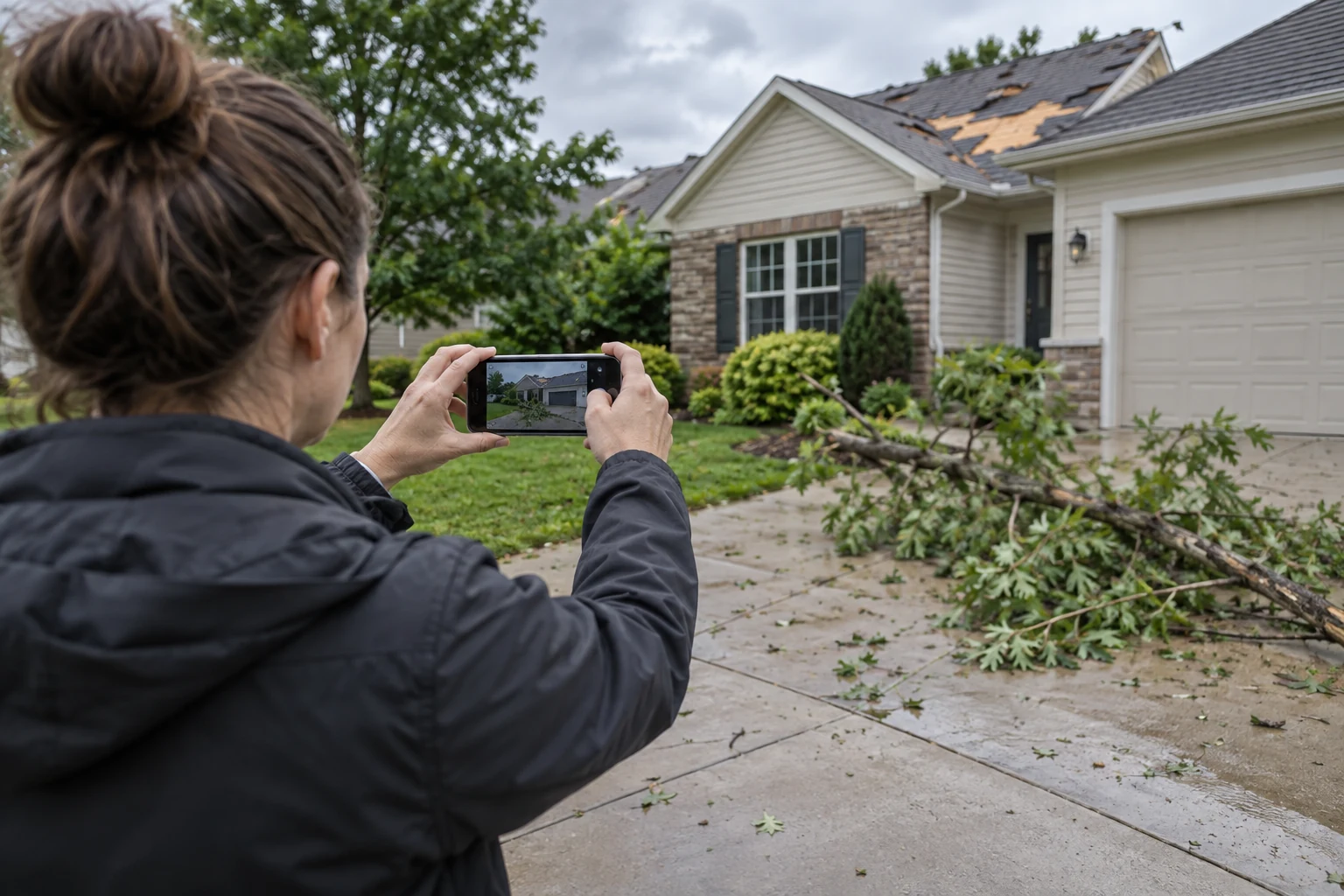
Take photographs from safe indoor positions and ground locations after conditions permit. Start with a wide view that identifies the room or side of the house, then take closer views without approaching hazards. Keep the original files and their date information; use copies if you want to add arrows or notes.
Record the time you first noticed the problem separately from the time you took each picture. If an old stain was already present, say so. Accurate distinctions between an existing condition and a new observation make the record more useful.
Stay off the roof
Do not climb onto the roof to inspect shingles, retrieve debris, or install a covering. Ground observations and interior photographs can start the conversation. Let a qualified professional decide how to access damaged areas safely once wind, rain, and surrounding hazards allow an inspection.
A clear view from the yard is not proof that every slope is sound. Tell the inspector which areas you could not see. Avoid reaching from a window or using a ladder to improve a photograph.
Arrange temporary protection
Ask a qualified contractor about temporary tarping or another suitable protective measure. Explain any active leak, tree impact, missing roof covering, or access obstacle when you call. Confirm who will perform the work, what is proposed, and how its price will be documented before authorizing it.
Request photographs before and after the temporary work when safe to obtain, and retain the invoice. A tarp is temporary protection, not a final repair or proof that the roof can be left unattended. Ask how to monitor it and whom to contact if conditions worsen.
Note when the storm and damage were observed
Write down the storm date, the approximate time you experienced it, and when you first found damage. Separate personal observations from information supplied by a neighbor or weather report. If you were away, record that rather than choosing an exact time you cannot verify.
Save relevant weather alerts as context. A report of hail or wind nearby does not document the condition of your own roof, so keep weather information alongside property photographs rather than treating one as a substitute for the other.
Get a documented inspection
Request a storm damage roof inspection that identifies observed damage, affected locations, and recommended construction work. Ask for photographs with descriptions that you can relate to your home. Note any inaccessible areas or conditions that prevent a complete examination.
Ask the inspector to distinguish an observation from a conclusion about its cause. A useful report describes the roof and the repair options; it does not need to predict what an insurer will decide.
Contact your insurer directly
Report the situation using your insurer’s verified contact details and ask what information it needs. You do not need to finish every earlier checklist item before making that contact. Explain urgent temporary protection needs, ask about documenting expenses, and keep a note of the conversation.
The Virginia SCC’s disaster-loss guide discusses photographs, receipts, and direct communication with the insurance company. Ask the insurer about your own coverage and next steps; a general guide cannot establish a payment or outcome for your claim.
What to Expect Next After Roof Storm Damage
Keep temporary protection, the construction decision, and the insurance review clear in your notes. They may happen on different schedules. Ask each party what it needs next and record the response, instead of assuming that an inspection appointment, a repair estimate, and an insurance decision are the same milestone.
Turn inspection findings into a written scope
A construction proposal should explain the areas being repaired, materials proposed, and any conditions that still need investigation. Ask whether the inspection supports a targeted repair or a broader project. Review roof repair in Northern Virginia when the recommendation concerns a defined damaged area.
If the recommendation is replacement, ask what findings support that scope. Request a clear distinction between necessary work and optional changes. The information on roof replacement in Northern Virginia can help you prepare questions about the proposed project without deciding the scope before the roof is examined.
Keep unanswered questions visible
Write unresolved items in a short list: areas not inspected, temporary work still needed, an unclear line in the estimate, or a document the insurer requested. Put a person or organization beside each item so you know where to direct the question. Update the list as answers arrive.
If an estimate changes, request the revised scope and explanation in writing. Keep the earlier version for comparison. An organized record is useful even when everyone agrees, because you can see what changed between the first visit and the final work.
Confirm timing without assuming a deadline
Ask your insurer for the reporting, documentation, and repair timing that applies to your situation. Claim timing and any applicable legal deadlines: [VERIFY: current requirement]. Save the insurer’s written instructions and clarify uncertainty promptly rather than relying on a deadline mentioned by someone at the door.
Ask the contractor separately about safe access, material availability, and the next update on scheduling. Do not treat a proposed start date as permission to ignore a worsening leak. Report any change in conditions so the temporary protection plan can be reviewed.
Red Flags in Post-Storm Door Knockers
A knock at the door does not tell you whether a contractor is qualified. Evaluate the business identity, documents, and proposed work before signing anything. The Virginia DPOR disaster-recovery guidance recommends checking contractor credentials and using a written agreement.
A license claim you cannot verify
Ask for the exact business name and license details, then use DPOR’s license lookup to check the record independently. Make sure the identity shown in the record matches the company named on your proposal. Virginia licensing requirements for the proposed work: [VERIFY: current requirement].
If a salesperson cannot explain who would contract with you, who would perform the work, or where the company can be reached afterward, pause. A logo, business card, or verbal assurance is not a replacement for information you can check.
Out-of-state plates without clear business information
An out-of-state vehicle plate is a prompt to ask about the business, not evidence of misconduct on its own. Focus on the company’s verified identity, relevant credentials, contact information, and plan for service after the work. Apply the same checks to a familiar local vehicle.
Ask who will handle a callback and where that responsibility appears in the contract. A specific answer is more useful than a statement that a crew is working throughout the neighborhood.
An “authorization” with unexpected obligations
Read the whole document before signing an inspection authorization, work order, or other form. The label on the first page does not explain every obligation inside. Look for descriptions of work, payment terms, cancellation language, and any commitment tied to future events.
Ask for a copy you can review without pressure. Contract and cancellation requirements: [VERIFY: current requirement]. Obtain qualified advice if you do not understand a term, rather than relying on a salesperson’s promise that the signature is just a formality.
Pressure to pay or promises about insurance
Pause when the sales pitch depends on signing immediately, paying the whole project upfront, or accepting an assurance about an insurance outcome. Ask for the actual construction price and payment schedule. Direct questions about coverage and the insurer’s decision to the insurer.
The FTC’s guidance on scams after weather emergencies recommends independent contractor checks and careful payment decisions. Keep your repair decision grounded in documented work, with enough time to understand the agreement you are making.
Keep a Roof Storm Damage Record You Can Use
Create a folder that contains the original photos, your dated notes, the inspection report, estimates, temporary-work receipts, and communications. Give files clear names that identify their subject. Record who supplied each document so later questions can go to the right person.
| Record | Include | Check before relying on it |
|---|---|---|
| Photographs | Original files and a room or roof-side description. | Do the date and location reflect what you actually observed? |
| Inspection report | Findings, photographs, access limits, and proposed work. | Are observations and conclusions clearly distinguished? |
| Temporary-work invoice | Work description, date, and payment record. | Does it describe the protection actually installed? |
| Construction agreement | Scope, materials, schedule assumptions, and payments. | Can you identify optional work and unresolved items? |
Keep new observations factual as the project moves forward. If another rain brings a new leak, record it and notify the appropriate professional. You do not need to diagnose the cause yourself to give a clear account of what happened.
Frequently Asked Questions
Should I call a roofer or my insurer first after a storm?
Contact both promptly when your roof appears damaged, while making safety the first priority. Tell a qualified contractor about urgent protection needs and report the loss directly to your insurer. These steps can happen alongside each other; you do not need a finished construction estimate before asking the insurer what information it needs.
Can I put a tarp on my damaged roof myself?
Arrange professional temporary protection instead of climbing onto a damaged roof yourself. Describe the leak, missing covering, and any tree or utility hazards when you call. Ask what work is proposed and how it will be documented. Retain photographs and receipts, and ask your insurer about the expenses without assuming reimbursement.
What should I do if a storm-damage contractor pressures me to sign?
Pause and review the complete document before signing. Verify the company’s identity and credentials independently, request the written scope and payment terms, and ask about anything unclear. An inspection authorization can contain obligations beyond its label. Do not let a promise about an insurance outcome replace your own review of the proposed work.