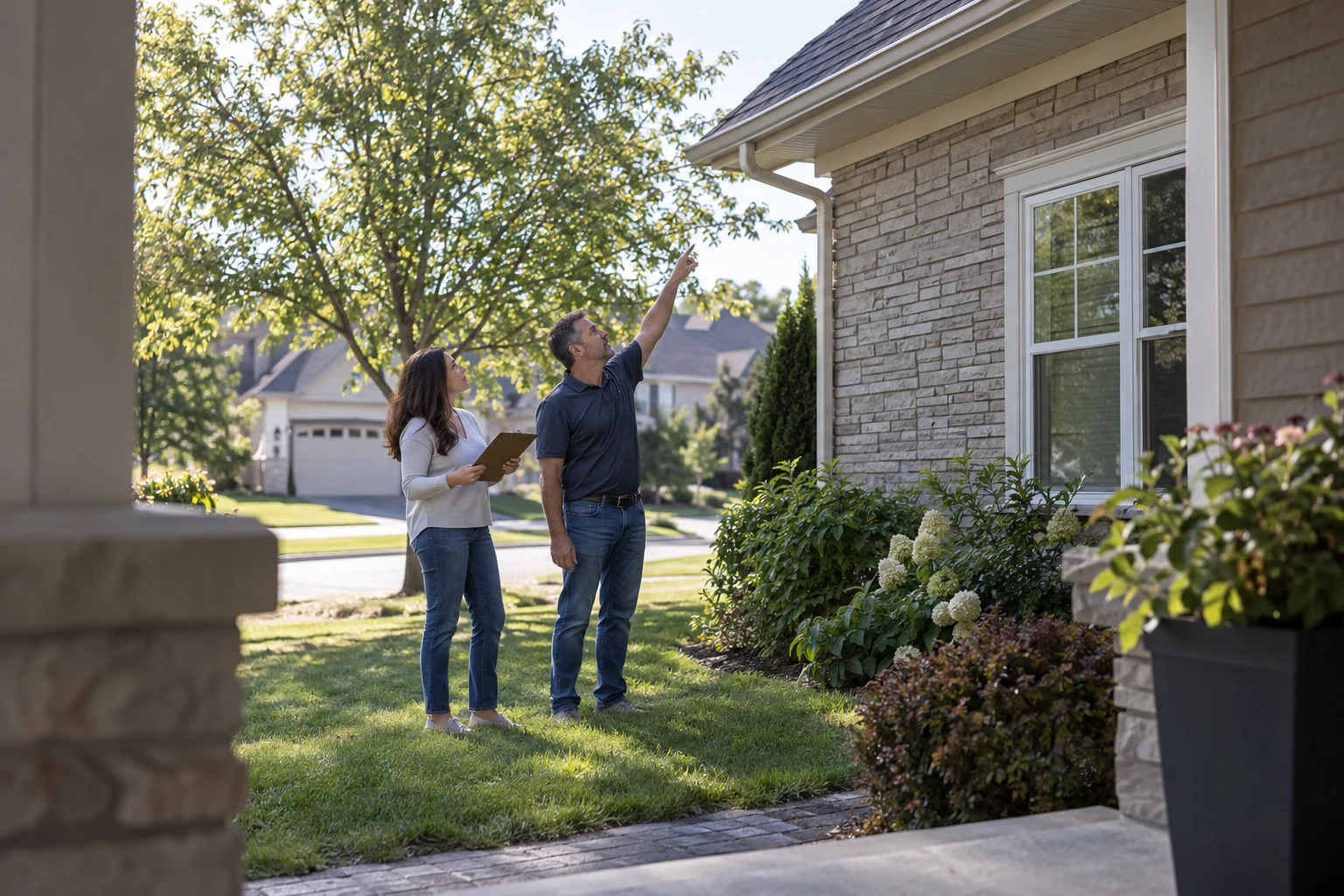
Before Your Roof Insurance Adjuster Visit
Start a folder for the visit before you gather more photographs. Put the claim number, appointment details, insurer contact, and property address on its first page. Keep a copy on your phone and a backup somewhere you can reach if the home loses power.
Write a short timeline using what you actually know. Separate the storm date from the date you first noticed water, missing shingles, or debris. If you discovered a ceiling stain several days later, record that gap instead of assigning the stain to a storm without supporting evidence.
The NAIC's homeowners claim guidance recommends photographs, a damage list, and repair receipts. Turn those records into a simple index so the adjuster can find each item. A file labeled with the room or roof side is easier to follow than an unexplained collection of close-ups.
Include older inspection reports and repair invoices, even when they show a previous problem. The record should distinguish earlier conditions from changes you recently noticed. If the installation date is uncertain, use an invoice or other available record and describe any remaining uncertainty.
Bring a Professional Inspection Report
A useful report identifies the inspected areas, visible conditions, photographs, and any access limitations. Ask for roof sides to be labeled consistently, such as front, rear, left, and right as viewed from the street. North and south labels can also work if every document uses the same orientation.
Ask whether the report distinguishes observations from possible causes. “Missing shingle above rear gutter” records a condition; a cause assessment needs supporting observations. The report should also say when snow, a steep section, or another obstacle prevented a complete examination.
When arranging a storm damage roof inspection, request photographs that connect detail views to wider roof views. Keep original image files. If you add arrows or labels to copies, preserve the originals so the added markings cannot be confused with marks on the roof itself.
Use This Pre-Visit Checklist
- Confirm the appointment. Verify the visitor's name and arrival arrangements through your insurer's established contact channel.
- Prepare the records. Gather the timeline, policy documents, claim number, inspection report, earlier repairs, and temporary-work receipts.
- List every affected location. Include interior rooms and separate structures when relevant, with photographs taken from safe locations.
- Plan access. Secure pets, identify a clear ground-level route, and tell the adjuster about locked gates or restricted areas.
- Write your questions. Ask how to obtain the findings, where to send additional records, and whom to contact after the visit.
- Record current conditions. Note new water entry or changes since the first inspection without guessing their cause.
Do not postpone urgent protection while waiting for an appointment. Tell the insurer about active water entry and ask how it wants temporary work documented. Arrange professional help, keep receipts, and stay away from wet electrical fixtures or visibly sagging ceilings.
What Adjusters May Examine on the Roof
The inspection approach depends on the reported event, roof material, access, and the insurer's process. Ask which areas will be assessed and how any inaccessible areas will be recorded. One view from the driveway may not explain what is happening behind a dormer or along a rear valley.
Test Squares and Slope-by-Slope Assessment
For hail inspections, you may hear the term “test square.” This is a selected roof area used to examine and record conditions in a consistent sample. Haag's explanation of its test-square method describes sampling different roof directions because wind-driven hail can affect those directions differently.
A test square is an inspection tool, not a promise of roof replacement. Ask where each sample was located, what observations were recorded, and whether the sample represents that slope. Avoid treating a number of marks mentioned online as a universal payment threshold.
Slope-by-slope notes help you understand a roof with several connected sections. A rear addition, porch, or dormer may have a different covering or condition from the main roof. Ask whether the written report names these areas individually so a missing section can be identified without confusion.
Soft Metals and Other Nearby Surfaces
An inspection may also consider gutters, metal vents, flashing, and other exposed surfaces. Dents or impact marks can provide context, but a mark on metal does not by itself establish the condition of adjacent shingles. Ask how those observations relate to the roof findings rather than assuming all materials responded alike.
Haag's hail inspection protocol describes reviewing site evidence before evaluating roof-surface anomalies. That sequence helps put individual marks in context. Your own ground-level photographs can preserve observations, while close roof examination belongs with the professionals conducting the inspection.
Ask the adjuster to distinguish newly reported damage, earlier repairs, and general weathering in the written findings. A roof can contain more than one condition. If the cause or timing of a mark remains uncertain, the record should preserve that uncertainty.
What Factual Information a Contractor Can Provide
A roofing contractor can inspect, photograph observed conditions, document measurements, and prepare an estimate. If you want the contractor present, ask the insurer about attendance and confirm the appointment with both parties. Ask the contractor what inspection records will be available for you to share.
Where permitted, a contractor may discuss observed construction and damage facts on site. Examples include the location of a torn shingle, the measured length of a valley, or the condition of flashing at a chimney. Keep questions about your coverage and payment with the insurer.
A clear estimate identifies the proposed work by roof area and component. Ask for materials, quantities, labor, disposal, and any assumptions about concealed conditions. If the proposal includes optional improvements, ask for those to be identified separately so you can compare the base work fairly.
You can request an explanation of repair feasibility in construction terms. For example, ask which pieces would be removed, how adjoining material would be protected, and what condition might change the proposal once work begins. An estimate should describe the work the contractor proposes without predicting the insurer's decision.
For localized damage, discuss roof repair in Northern Virginia and request the proposed repair area in writing. For broader deterioration or damage, ask for a separate explanation of why replacement is recommended. Keep the physical repair recommendation and the insurer's coverage response as separate documents in your folder.
Reading the Roof Scope After the Visit
Request the written scope, estimate, and explanation of the insurer's decision. Begin with the property details and diagram before looking at the total. Check that the roof sides, detached structures, and interior rooms match the areas you reported.
Then compare descriptions line by line with your inspection report and contractor estimate. A different total may reflect different quantities, different work, or a payment adjustment. Find the specific difference first so your question can point to an identifiable item.
| Item | What you can check | Question to send |
|---|---|---|
| Roof diagram | Named slopes and additions | Where is the rear porch included? |
| Material quantities | Units and measured areas | Are these figures measured area or ordered material? |
| Flashing and vents | Observed components and proposed work | Which line addresses this photographed component? |
| Interior damage | Room names and affected surfaces | Was the documented ceiling stain assessed? |
| Payment summary | Stated deductions and payment stages | Can you explain each adjustment in writing? |
Do not assume a roof estimate and the first payment should be identical. Ask the insurer to identify the applicable valuation method and any documents needed for later payment consideration. The Virginia homeowners insurance guide explains actual cash value and replacement cost; your insurer can address the terms of your own policy.
If the Roof Scope Looks Incomplete
Make a short list of the specific items you cannot locate. For each item, attach the relevant photograph, measurement, or report page and describe the factual question. For example, ask where a photographed damaged vent appears in the estimate instead of sending only a request for a higher total.
Send the information through the insurer's stated channel and save its receipt or confirmation. Ask whether additional inspection is available and what information is needed to consider it. Keep a dated log of your request and the response so later correspondence has a clear reference point.
If the response does not resolve your concern, review the Virginia Bureau of Insurance complaint resources. The agency explains its assistance process and its limits. A complaint or another inspection does not establish that additional payment is owed.
Continue planning for the roof's physical needs while seeking clarification. If the documented condition calls for larger work, discuss roof replacement in Northern Virginia and request a written construction scope. Before authorizing permanent work, confirm the insurer's documentation expectations and make sure you understand your own payment commitments.
Frequently Asked Questions
Should my roofer attend the insurance adjuster's visit?
A roofer's attendance can be useful for identifying observed roof conditions and construction details, if the visit arrangements permit it. Ask your insurer about attendance and confirm the time with the contractor. Bring the inspection report and estimate, and direct coverage and payment questions to your insurer. Attendance does not determine the claim outcome.
Do I need to go onto the roof with the adjuster?
No, you can prepare for the visit and discuss the findings from a safe ground-level location. Give the adjuster your photographs, timeline, and list of affected rooms or roof areas. Leave roof access to the professionals conducting the inspection. Ask for labeled photographs and an explanation of any areas that could not be assessed.
What if the adjuster's roof scope misses something?
Ask the insurer about the specific item and provide the relevant photograph, measurement, or inspection-report page. Request a written explanation and ask what process is available for additional information or another inspection. Keep copies of your submissions and responses. A factual correction may clarify the record, but it does not guarantee a different coverage decision.