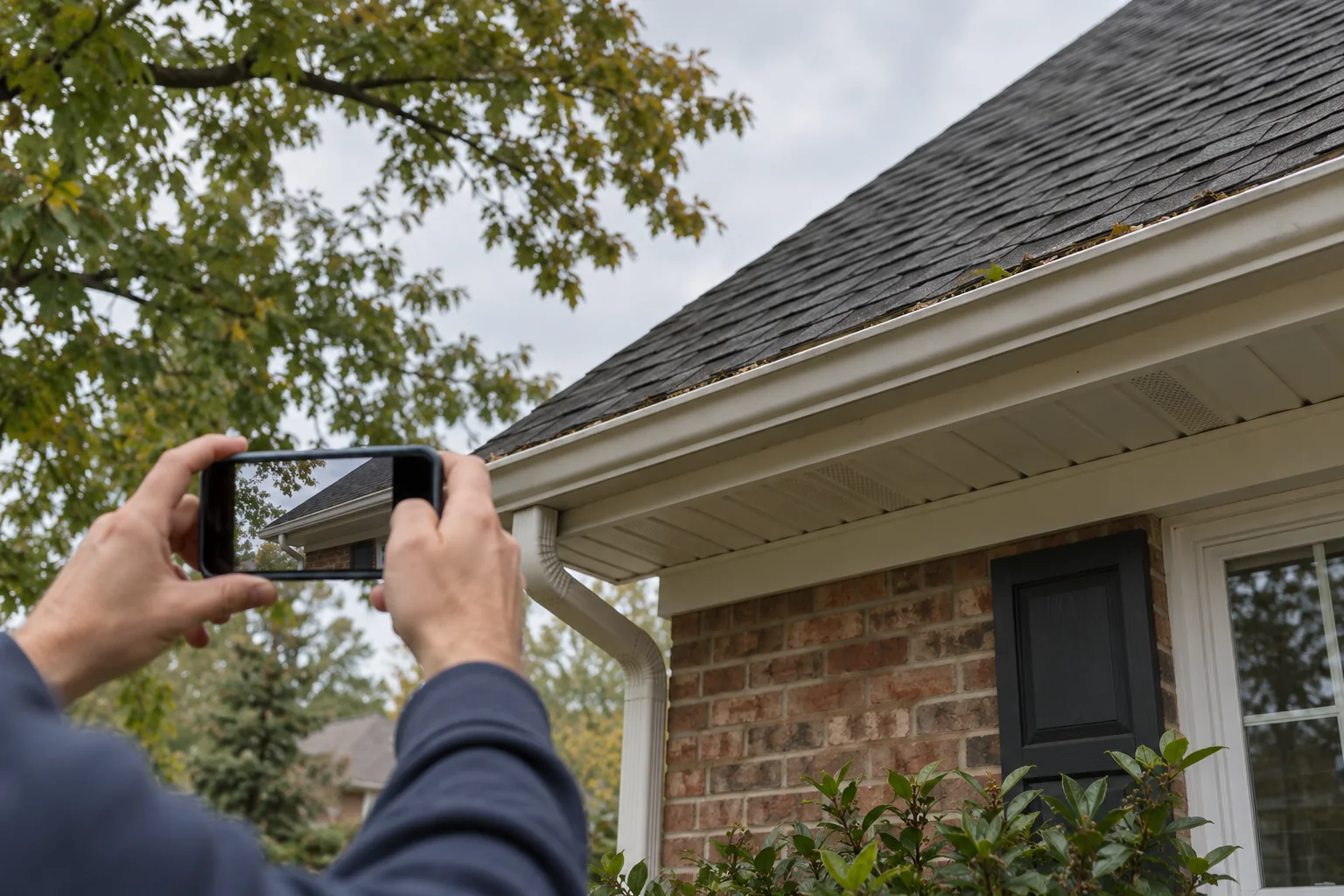
Begin storm preparation from the ground
A Northern Virginia storm season roof checklist is useful before a forecast becomes urgent. Walk only through safe accessible ground areas in calm weather and look at visible roof edges, gutters, downspouts, and tree limbs. Use binoculars or a camera zoom if available. A ground check is a screening step, not a complete roof inspection.
Look for missing or displaced covering, bent edge metal, loose gutter sections, and debris concentrated at valleys or roof-to-wall intersections. Write down the location rather than assigning a cause. A mark visible today may predate the next storm, which is precisely why dated baseline photographs matter. Never climb onto the roof to improve a photograph.
Interior observations belong in the same preparation file. From normal accessible spaces, record existing ceiling stains and known leak locations. Do not enter a suspect attic, damaged area, or space with an electrical hazard. Ask for an assessment if the safe ground view leaves a concern unresolved.
Check gutters and downspouts before heavy rain
From the ground, identify overflowing sections, visible debris, separated connections, and downspouts that discharge against the building. Observe the outlet during ordinary rain from a sheltered safe position if possible. Do not stand outside during thunder or severe weather to watch drainage. A dry-weather photo and a previous observation may already establish the issue.
Arrange gutter clearing through a suitable professional when access or height makes the task unsafe. Include downspouts and outlets in the request, not only the visible trough. Ask for documentation of blockage, loose attachments, or damage found during the work. [OWNER: confirm any separately offered gutter service before booking].
Keep drainage repairs separate from assumptions about the roof covering. Overflow can wet walls and create symptoms that look like roof leakage. A clear record of where water appeared helps the investigating contractor. Ask what correction is proposed and how the completed drainage path will be checked.
Tree limbs: arrange qualified help rather than guessing a distance
Identify limbs touching the roof, visible dead branches, and vegetation that restricts gutters or viewing. Photograph the concern from a safe distance. Ask a qualified tree professional to assess pruning or removal needs. This guide does not prescribe a universal clearance measurement because tree condition, species, utilities, and the property boundary matter.
Do not attempt storm-time cutting, work near power lines, or remove a branch resting on the building yourself. Keep people away from damaged trees and utility hazards. Confirm any boundary or association permission before planned tree work. [VERIFY: current permission requirement].
Roof maintenance and tree care require different skills and responsibilities.
Documentation to have on file BEFORE a storm
Create one organized roof folder while the building is in ordinary condition. Include dated photographs from accessible ground viewpoints, with wide context and closer zoomed views where useful. Label the side of the house and retain the original files. A screenshot with a handwritten date is less useful than an identifiable original photograph with its capture information intact.
Keep a copy of the policy declarations page and your insurer’s own contact details in a private household location. Do not upload policy documents to a public checklist, roofing review, or shared neighborhood folder. Ask coverage questions directly to the insurer or an appropriately licensed professional. A roofer’s construction report does not determine what the policy covers.
Record the roof’s installation date if documented, covering material, exact product if known, and any sections replaced separately. Keep invoices, warranty documents, past inspection reports, and repair photographs. If the age is unknown, write unknown and describe the source of any estimate. The house’s construction date does not necessarily date the current covering.
Make the folder accessible if a storm interrupts power or access to the house. Retain a secure backup and a simple index showing where the originals are stored. Avoid unnecessary personal information in copies shared for a construction assessment. Only provide the documents relevant to the agreed purpose.
Separate records from predictions about a claim
Baseline records can help distinguish an earlier condition from a new observation, but they do not guarantee a claim result. A later inspection may find aging, installation defects, storm-related damage, or more than one condition. Preserve the evidence without labeling every missing piece as covered storm damage. The insurer makes its own policy decision.
For an unresolved roof concern, arrange a free roof inspection and ask for a factual report describing visible findings and limitations. Keep recommendations tied to construction needs. Any insurance question should remain with the homeowner and the insurer or an appropriately licensed professional.
Use a printable storm season checklist
Use this table as a household task record. Check an item only after the action is completed or assigned, and write a contact or file location in the notes. The printed version is designed to stand on its own and should not contain policy numbers or other private information.
Northern Virginia storm season roof checklist · 2026
Property: ____________________ Review date: ____________________
Follow-up contact: ____________________
| Done | Action | When | Notes or assigned person |
|---|---|---|---|
| □ | Photograph visible roof edges and slopes from safe ground locations | Before storm season | ________________ |
| □ | Record existing ceiling stains and previous leak locations | Before storm season | ________________ |
| □ | Arrange safe professional gutter and downspout clearing where needed | Before heavy-rain periods | ________________ |
| □ | Request qualified assessment of touching or damaged tree limbs | Before severe weather | ________________ |
| □ | Save roof age, material, invoices, and prior inspection reports privately | Before an event | ________________ |
| □ | Locate declarations page and insurer contact details in private records | Before an event | Private file location only |
| □ | Record storm date and new safe ground-level or interior observations | After conditions are safe | ________________ |
| □ | Arrange documented assessment and temporary protection if needed | After new damage or leakage | ________________ |
Remain off the roof. Keep away from utility, falling-branch, and structural hazards. This checklist does not establish insurance coverage.
Post-storm actions begin with safety
Stay sheltered until conditions are safe. The National Weather Service advises going inside when thunder is heard; do not prioritize roof photographs over storm safety. Once the area is safe, compare accessible ground views with the baseline photographs. Record new observations and the approximate date and time of the event.
If water enters inside, move belongings only when that can be done safely and keep away from affected electrical equipment or unstable ceilings. Seek appropriate emergency help for an immediate hazard. Photograph accessible interior damage without touching unsafe material. Avoid taking apart roofing, flashing, or damaged electrical components.
Discuss temporary protection with a qualified contractor when the roof is open or leakage is active. A homeowner should not install a tarp on the roof. Ask what the temporary measure addresses, its limitations, and when a permanent assessment can follow. Keep photographs and receipts without assuming reimbursement.
Get a factual inspection after new damage
A storm damage roof inspection should describe observed conditions, their locations, and any access limitations. Ask the report to distinguish a new tear, displaced component, or impact concern from older wear. The report should not treat the existence of a storm as proof that every defect came from it.
Contact your insurer through verified channels if you have policy questions or choose to report damage. Keep the event record and relevant photographs available. Do not sign under pressure because someone predicts approval or a particular settlement. Rain Guard Roofs provides roofing assessment and construction information, not a promise about the insurer’s decision.
Escalate active leakage without losing the record
Discuss emergency roof repair if immediate protection is needed, with availability and the specific scope confirmed before booking. Preserve existing photographs, record the temporary work, and obtain the written description. Emergency protection and permanent correction are separate decisions, even when the same contractor handles both.
After repair, add completion photographs and the final invoice to the same folder. Note which defect was corrected and whether another condition still needs review. This closes the evidence gap between the initial observation and the next storm season check.
Refresh the checklist each year
Review the folder annually and replace obsolete contacts, add new repairs, and photograph changed roof sections. The 2026 title identifies this edition, not a claim that the advice applies only to that year. A future revision should update the year after the checklist, sources, and article have been reviewed, with the modification date reflecting the actual update.
For ordinary planning concerns between storms, discuss roof repair in Northern Virginia before a small known defect becomes an urgent wet-weather problem. Preparation cannot prevent every failure. It can make the response safer and the construction record clearer.
Make the baseline photographs repeatable
Choose ground viewpoints that you can safely use again. Save a wide view showing the side of the building before taking a zoomed view of a concern. Record which view corresponds to the front, rear, or another identifiable area. Do not create an apparent before-and-after comparison from different sides of the house without explaining the difference.
After an event, preserve the original baseline set rather than replacing it with the new images. Put the event photographs in a dated subfolder and add brief factual notes. Record when tree cover, lighting, or another limitation prevents a useful comparison. A missing view is an inspection limitation, not evidence that damage is absent.
If you share files with a contractor or insurer, provide only the relevant originals through the agreed channel. Keep a private copy and note what was sent. This organization helps the recipient understand the sequence without adding a claim prediction or a diagnosis that the images cannot support.
Preparedness sources
Frequently Asked Questions
Should I inspect my roof by climbing up before storm season?
No. Keep homeowner checks at safe ground level or in normally accessible interior areas. Use zoomed photographs to record visible concerns, and arrange professional assessment when the view is limited. Do not approach power lines, damaged trees, unstable ceilings, or electrical hazards, and do not go outside to inspect during thunder or severe weather.
Which roof records should be saved before a storm?
Save dated baseline photographs, documented roof age and material, invoices, previous inspections, repairs, and warranty documents. Keep your declarations page and insurer contacts privately rather than in a public checklist. Record unknown dates honestly and preserve original photograph files so later observations can be compared with the earlier condition.
Do photographs guarantee insurance coverage for storm damage?
No. Photographs document conditions but do not establish coverage or guarantee a decision. Keep a factual storm record and obtain a construction inspection when needed. Direct policy and claim questions to your insurer or an appropriately licensed professional, and keep temporary protection receipts without assuming they will be reimbursed.