Why Hail Damage Gets Missed
Hail damage on a Northern Virginia roof can be difficult to recognize from a driveway. A roof may still look complete, with no missing shingles or water dripping inside, while closer examination reveals impact damage. The first task is to record possible warning signs and arrange an assessment, rather than decide the repair scope from a distant photograph.
Some damage becomes apparent later. GAF identifies granule loss at impact points and exposed fiberglass among the possible signs of latent storm damage; losing protective granules can also accelerate shingle aging. That makes the absence of an immediate leak an incomplete measure of roof condition. See GAF's technical bulletin on storm-damaged shingles.
Begin only after conditions are safe, and keep your observations at ground level. Use a camera zoom or binoculars to record anything clearly visible without approaching fallen branches, hanging debris, or damaged electrical equipment. A blurred dark patch on a shingle should be labeled as something to examine, not as confirmed hail damage.
Look inside occupied rooms for new ceiling stains, damp walls, or drips, and note the location and discovery time. Report active water entry when you contact a contractor, because temporary protection may need attention before a full condition assessment is complete. Avoid entering a space with a sagging ceiling or another visible hazard.
A useful inspection report should explain what was observed on each accessible roof section, show photographs, and identify areas that could not be assessed. Ask the contractor to separate damage findings from recommendations so you can understand why a particular repair is proposed. If you need help deciding what to document, start with a storm damage roof inspection.
Keep your own notes simple: what you saw, where you saw it, and whether you have an earlier photograph of that area. An honest note that the roof was partly obscured is more useful than assuming every surface was unharmed. The record can be updated after a professional has examined the roof.
Soft Metals as Corroborating Evidence
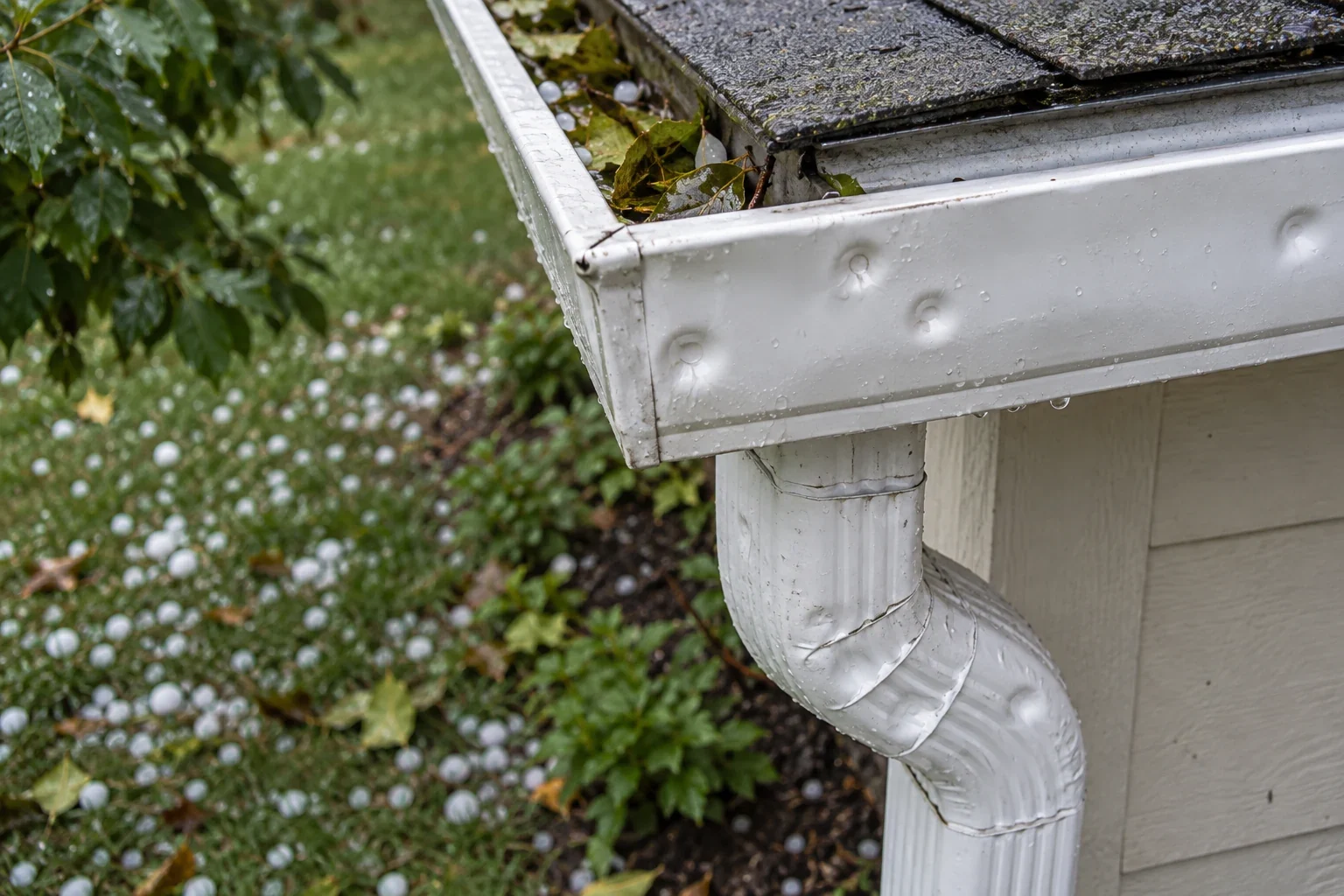
Dented gutters and downspouts are useful clues because they can show impacts on surfaces you can see from the ground. Damaged screens and dinged AC condenser fins offer other places to document possible storm exposure. GAF includes gutters, downspouts, and air-conditioning damage in its guidance on examining the exterior after hail. See GAF's hail-damage identification guide.
These observations corroborate possible hail exposure; they do not prove that the shingles sustained damage. A thin metal surface and a layered roofing product respond differently to an impact, and an old dent may predate the storm being discussed. A sound assessment connects the surrounding evidence with findings on the roof itself.
Use this checklist to organize observations without turning a walk around the house into a roof diagnosis. Take a wider photograph showing the location and a closer photograph showing the mark whenever both are possible from a safe position. Keep the original files and add descriptions separately.
| Observation | What to record | What it does not establish |
|---|---|---|
| Dents in gutters or downspouts | The side of the house, affected section, and any earlier photos. | That the shingles were damaged or that every dent is new. |
| Damaged window screens | The window location and the visible change in the screen. | The condition of the roof covering above that window. |
| Dinged AC condenser fins | The visible affected face, without touching the unit. | The cause of every mark or whether roof repairs are needed. |
| Dark or bare-looking shingle spots | A ground-level image and the approximate roof section. | Whether the spot is an impact point, wear, or another condition. |
| New interior water staining | The room, discovery time, and change since first noticed. | The exact entry point or cause of the leak. |
A neighbor's report can explain why you looked at your own property, but it cannot establish the condition of your roof. Label secondhand observations as secondhand rather than adding them to your own storm account. If the storm time is uncertain, preserve that uncertainty instead of choosing a date to fit an inspection finding.
Ask the professional to explain how roof photographs relate to the ground observations. For example, a gutter image should identify the gutter, while a shingle finding should have its own location and description. Keeping those records distinct makes the report easier for you to review and reduces confusion about what has actually been confirmed.
Damage by Material
Hail does not leave the same mark on every roof. The Insurance Institute for Business & Home Safety describes asphalt shingle damage as dents, tears, or displaced granules, while metal roofs may show dents that primarily affect appearance. Its research also identifies hailstone properties and impact energy as factors in the result, which is why a single size rule cannot diagnose every roof. See IBHS's explanation of weather and hail damage.
Asphalt shingles: bruising and granule loss
An asphalt shingle may develop an indentation, a damaged area sometimes described as bruising, or granule loss around an impact. A professional should examine the condition of that area and explain the evidence supporting the damage description. A photo of loose granules alone cannot show which part of the roof they came from or establish the cause.
The practical concern is what the damaged shingle can still do. IBHS research connects the severity of certain impact dents and tears with water leakage through tested shingles, but that does not mean every mark causes an immediate leak. See IBHS's research on hail damage and water leakage.
Metal roofs: appearance and performance
A dent can be visible without being a puncture. In its full-scale hailstorm demonstration, IBHS documented metal roof dents that were cosmetic, with no punctures in those tested roof sections. That distinction supports examining the actual condition before treating every metal dent as a reason for replacement. See the IBHS hailstorm demonstration report.
Slate roofs: fractures need a material-specific review
Slate can fracture, but a broken slate is not automatically evidence of hail. The National Slate Association describes other causes of cracking and breakage, including installation-related cracks and deterioration over time. A reviewer should consider the surrounding condition and available history rather than assign a cause from a single broken piece. See the association's technical bulletin on slate roofing.
The association also reports that selected natural slate products survived laboratory hail-impact testing, reinforcing that material identity and condition matter. Those results describe tested samples, not a guarantee for an existing roof. See the National Slate Association's hail-testing summary.
Once the findings are clear, ask for a repair scope tied to the affected areas. GAF notes that individual shingle replacement or replacement of a damaged roof plane may be possible in some situations, while surrounding damage can be difficult to assess. Review the roofing materials we install for product information, and discuss the actual findings before choosing a project scope.
Claim Timing
Contact your insurer promptly if you are considering a hail claim, and ask which information it needs from you. Record the storm date as accurately as you can, together with the date you first noticed each problem. Keep these separate when damage becomes visible after the event.
Policy notice, proof-of-loss, repair, and other applicable claim deadlines: [VERIFY: current requirement]. Ask your insurer to identify the timing that applies to your policy and circumstances in writing. Do not use a neighbor's deadline, a salesperson's statement, or a general online article as the date for your own file.
Build a folder with original photos, the inspection report, estimates, receipts, and your messages with the insurer. The Virginia State Corporation Commission recommends photographing damage before cleanup and retaining expense records, and directs homeowners to their agent or insurer for coverage information. See the Virginia SCC's disaster-loss guide.
If water is entering, arrange professional temporary protection and tell the insurer what is happening. Ask how it wants the damage documented before permanent work begins, while keeping records of any urgent protective work. For localized damage, discuss roof repair in Northern Virginia after the affected areas have been assessed.
A roofing report documents physical conditions and proposed work; your insurer answers coverage questions and makes the claim decision. Keep the written estimate separate from any insurance payment explanation so you can see what each document addresses. Photographs and careful notes improve the factual record without establishing a particular claim outcome.
Storm Chaser Warning
After hail, a door knock may arrive before you have had time to inspect your records. Treat a confident sales pitch as a reason to ask for evidence, not as a substitute for an assessment. Pressure to sign immediately, vague company details, and an unwillingness to provide a written scope are reasons to pause.
Verify the contractor's identity and license record through Virginia's Department of Professional and Occupational Regulation. Match the business name on the estimate to the record, and ask for references and a clear description of the proposed work. DPOR's post-disaster fraud guidance recommends license checks, written contracts, and caution about high-pressure sales.
Read every document before signing, including anything described as an inspection authorization. Identify whether it only permits an assessment or also commits you to paid work, and request a copy you can keep. An unclear explanation is a reason to get the terms clarified before proceeding.
Ask to see photographs identified as your roof, with locations that make the findings understandable. A useful recommendation should explain the observed condition, proposed repair, and any remaining uncertainty. Choose your next step from that record, your own questions, and the written scope rather than urgency created by a sales visit.
Frequently Asked Questions
Can I tell whether my roof has hail damage from the ground?
You can spot clues from the ground, but you usually cannot confirm the full roof condition there. Photograph dented gutters or downspouts, damaged screens, and visible changes around the house. Shingle impact points and hidden damage need professional examination. Ground observations help identify concerns and their locations; they do not establish the repair scope.
Do dented gutters mean my shingles need to be replaced?
Dented gutters do not establish that your shingles need replacement. They can support evidence of hail exposure, but roof materials respond differently, and some marks may be older. Ask for roof-specific photographs and an explanation of confirmed damage before deciding between repair and replacement. The recommendation should follow the condition of your roof.
Should I wait for a leak before having possible hail damage checked?
You should not wait for a leak to document suspected hail damage and arrange an assessment. Some storm damage is difficult to see at first, and an intact-looking roof can still need closer examination. Keep dated photos and inspection records, and contact your insurer directly for questions about coverage and the timing that applies to your situation.