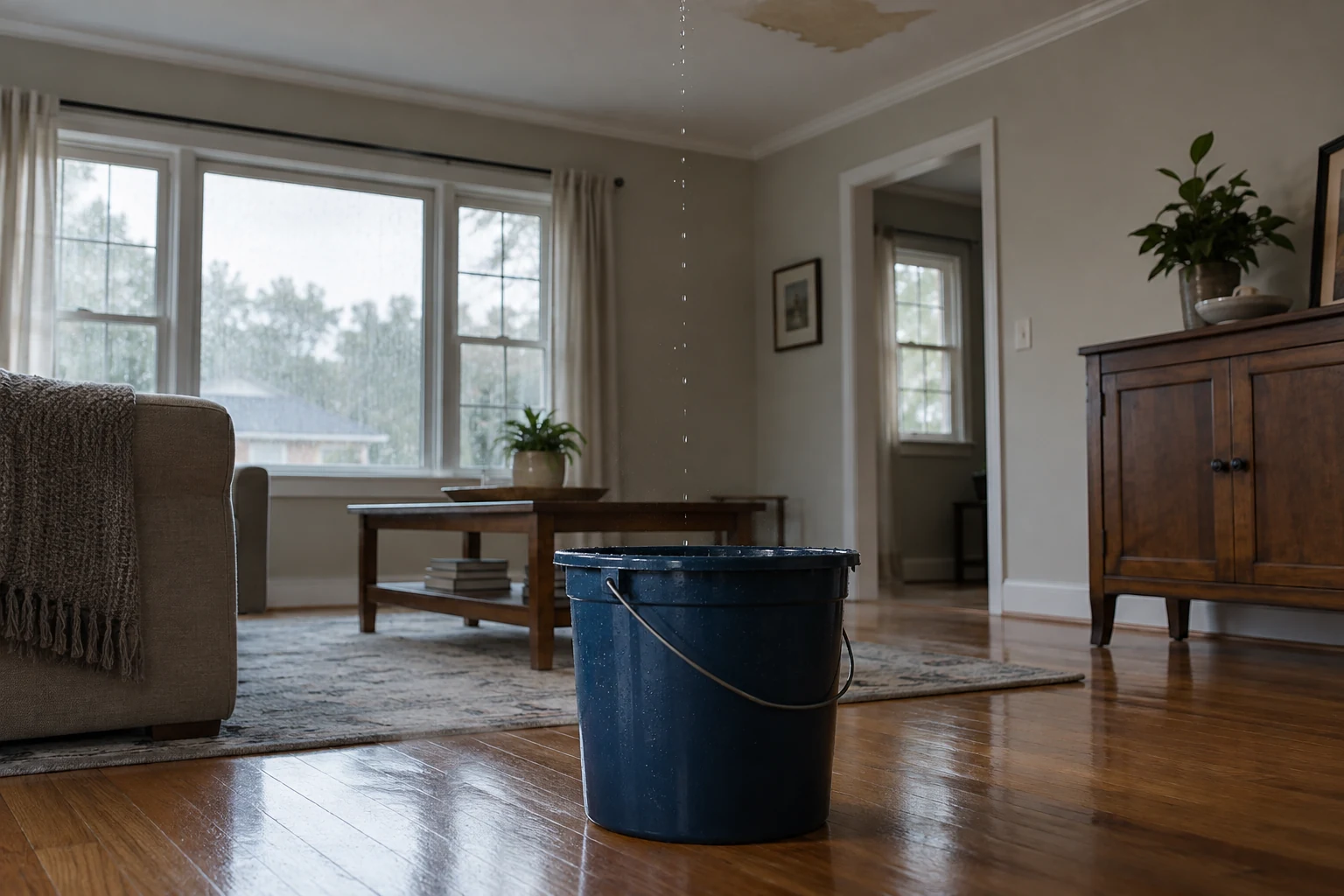
Emergency Roof Leak: Decide Whether the Room Is Safe
Leave the affected room if the ceiling bulges, cracks, or sheds material, or if the floor feels unstable underfoot. Do not stand beneath a swollen ceiling to collect water or move furniture. The American Red Cross warns that water-loaded ceilings are heavy and dangerous. Keep children and pets outside the area while a professional assesses it.
Water near a ceiling light, outlet, appliance, or electrical panel needs a different response from a drip over an empty floor. Avoid wet switches and equipment. Do not enter water to reach the electrical panel; the CDC recommends calling an electrician when the main switch cannot be reached safely. For smoke, sparks, collapse, or another immediate danger, leave and contact emergency services from safety.
If a tree has struck the building or power lines are down, keep everyone away from that part of the property. A roofing appointment does not replace an emergency safety assessment. Tell the responder what you can see from a safe location, without approaching for a closer photograph.
Contain the Drip Only Where It Is Safe
If the floor and ceiling appear stable and there is no electrical hazard, set a sturdy container under the drip. Move dry belongings out of the splash area only when you can reach them safely. Keep the route through the room clear, and stop if the stain expands quickly or material starts falling.
Do not puncture a ceiling, open wet electrical fixtures, or enter a wet attic to trace the leak. Leave exterior coverings and temporary roof work to a professional. A bucket can limit splashing, but it cannot establish that the surrounding ceiling is sound.
Use this quick decision checklist before doing anything inside the affected space:
- Sagging, cracking, or falling ceiling: leave the room and restrict access.
- Water at electrical equipment: keep clear and request qualified electrical help.
- Stable room with an isolated drip: contain water only from a safe position.
- Tree impact or visible structural movement: stay away and request a safety assessment.
- Uncertain conditions: leave the area and describe the uncertainty when calling for help.
What to Say When Calling a Roofer
For emergency roof repair, start with your address, callback number, and whether water is entering now. Name the room and describe the ceiling condition. Mention electrical contact, tree impact, or another hazard immediately so the person taking the call understands the situation.
Useful details include when the leak began, whether rainfall is continuing, and any exterior damage visible from a safe ground location. State observations plainly: “water is dripping beside the upstairs window” is more useful than guessing which roof component failed. Mention previous repairs if you know where they were made.
Ask about current availability, safe access, the proposed temporary work, and how charges will be explained. Confirm the appointment or next contact step before ending the call. Weather, access, and site hazards can affect scheduling; do not assume an immediate arrival or a permanent repair during an active storm.
Photograph the Damage Without Delaying Safety
Take a wide photo showing the room and a closer photo of the visible stain from a safe position. Record when you first noticed the leak and which photographs show later changes. Keep original files and avoid editing away details that might help explain the sequence.
Create a short note with the room name, approximate start time, rainfall conditions, and belongings affected. Add photographs of visible exterior damage only when conditions allow safe ground-level observation. You do not need a complete roof diagnosis before requesting help.
Save invoices for temporary work, cleanup, and inspection. If you have homeowners insurance, ask your insurer directly about notice, documentation, and any instructions that apply to the loss. Photographs and receipts provide a factual record; they do not establish coverage or reimbursement.
Separate Temporary Protection From the Final Repair
Temporary protection aims to limit further water entry until the roof can be assessed and repaired. Ask the contractor to identify what was done, its limitations, and the recommended next visit. A stopped drip does not by itself identify the original entry point or confirm that concealed materials are dry.
A storm damage roof inspection can document observed roof conditions after safe access is available. Tell the inspector where water appeared inside and provide earlier repair records. Ask for photographs, a description of the suspected entry path, and any limits on what could be inspected.
For the permanent work, request an itemized explanation of roof repair in Northern Virginia. Clarify which roof components are included and whether interior drying or ceiling restoration needs a separate specialist. Keep the temporary-work invoice and final repair scope together.
Arrange Drying After the Immediate Danger Passes
The EPA recommends prompt drying of water-damaged areas and items to help prevent mold growth. Treat that guidance as a reason to arrange prompt drying, not as permission to use wet electrical equipment. Significant water damage or hidden moisture may need a restoration professional.
Ask who will assess wet insulation, wall cavities, and ceiling materials before cosmetic repairs begin. Repainting a stain alone does not resolve an active moisture problem. Keep a simple follow-up list: roof repair completed, drying assessed, electrical concerns cleared by the appropriate professional, and interior repairs arranged.
Frequently Asked Questions
Should I put a bucket under a leaking ceiling?
Use a bucket only if you can place it safely beneath a stable ceiling, away from electrical hazards. Leave the area if the ceiling sags, cracks, or drops material. Do not stand beneath a bulge to catch water or puncture it. People’s safety comes before protecting the floor or furniture.
Does a stopped drip mean the roof leak is fixed?
No, a stopped drip does not confirm that the roof is repaired or that wet materials have dried. Rain may have slowed, or temporary protection may be limiting entry. Keep the inspection appointment and ask for a written repair scope. Arrange appropriate assessment of interior moisture before repainting or closing damaged areas.
What information should I have ready when calling Rain Guard Roofs?
Have your address, callback number, affected room, and the time you first noticed water ready. Say whether the leak is active and whether you see sagging, electrical contact, or tree damage. Describe only what you can observe safely. Ask about availability and the next step; an arrival time depends on current conditions.