Does Insurance Cover Roof Replacement or Only Repairs?
Coverage for roof damage and payment for an entire replacement are different questions. An insurer may accept that a covered event damaged part of a roof while assessing a limited repair scope. A recommendation to replace the roof also needs construction facts explaining why a smaller repair would not address its condition.
Start with the event and the evidence, rather than the roof's age alone. Record what changed, when you noticed it, and which roof areas or rooms are affected. An older roof may have both gradual deterioration and separate storm damage, so the inspection should describe the conditions individually.
The Virginia homeowners insurance guide explains that policies differ in the causes of loss they insure. Named-peril coverage lists insured causes, while open-peril coverage is subject to stated exclusions. Ask the insurer which provisions apply to the roof and the reported event.
A nearby house receiving a new roof does not establish what your insurer will decide. Your neighbor may have different damage, materials, policy terms, or records. Build your questions around your own property and the written explanation you receive.
Covered vs. Not-Covered Roof Conditions: A Conditional Guide
The table below is a starting point for questions, not a coverage decision. Every row depends on the policy, endorsements, cause of loss, and facts of the damage. Even when a cause is covered, the resulting scope could be a repair rather than full replacement.
| Reported condition | Possible treatment under the policy | What to document or ask |
|---|---|---|
| Wind tears or removes shingles | May be covered if wind is insured and no applicable exclusion removes coverage | Locations, dated photographs, and proposed repair extent |
| Hail damages roof materials | May be covered, subject to hail coverage and relevant roof limitations | Material condition and any cosmetic-damage wording |
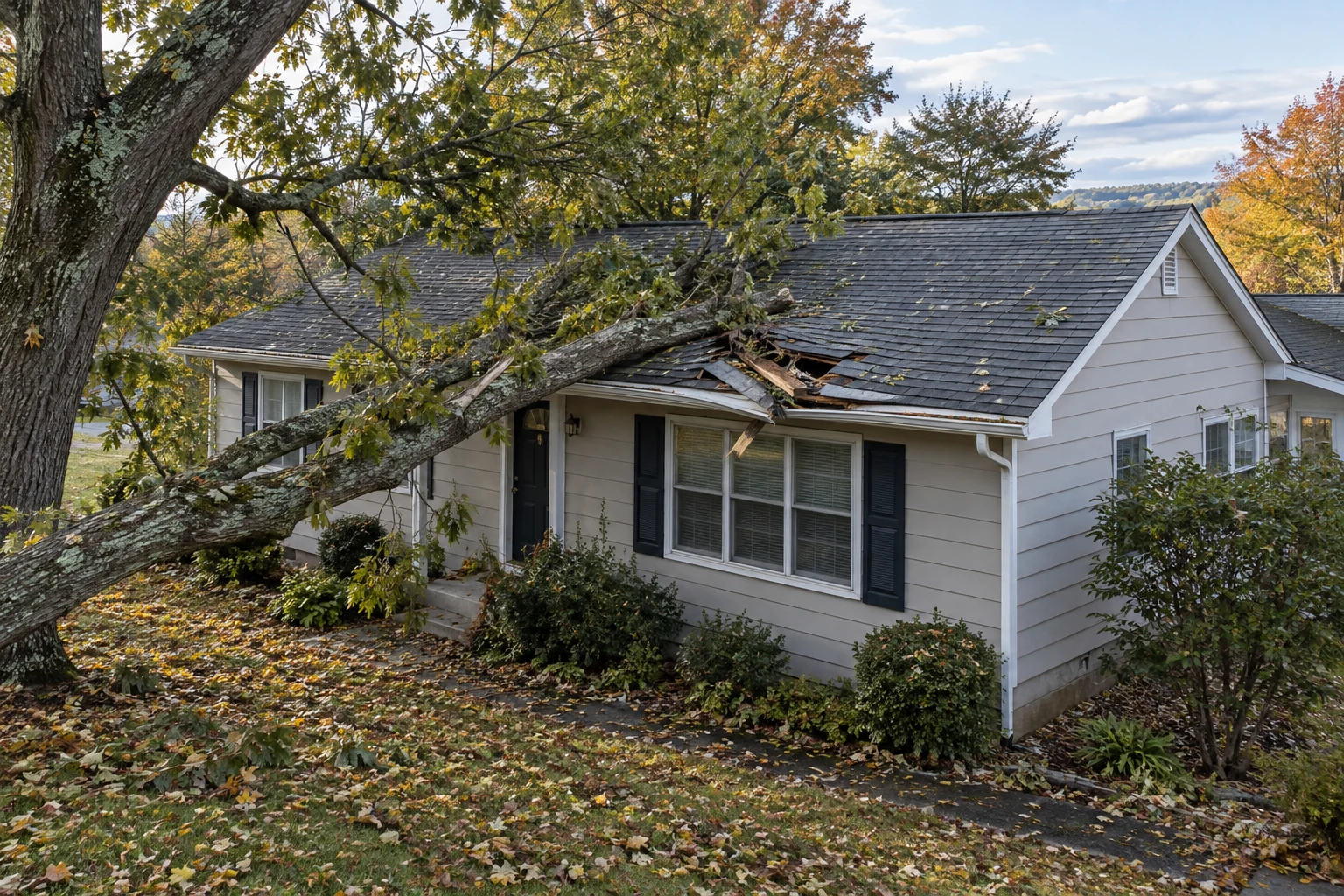
| A tree falls onto the roof | Impact damage may be covered if the event falls within the policy | Impact area, affected structure, and separate debris-removal questions |
| Shingles deteriorate with age | Routine deterioration is generally outside covered causes of loss | Current condition, repair history, and evidence of any separate event |
| An unresolved defect keeps leaking | Gradual damage or neglect may be excluded, depending on the facts and policy | When water entry began and what maintenance or repairs occurred |
| Wind damage and older wear coexist | The insurer may distinguish covered event damage from excluded deterioration | Separate observations for each affected roof area |
The NAIC's roof insurance guidance notes that wind and hail coverage can be excluded and that separate deductibles may apply. Do not rely on the general name “homeowners insurance” to answer those questions. Ask for the documents that explain your roof coverage.
For background on exclusions, Virginia's property-coverage regulation lists wear, deterioration, and neglect among permitted exclusions [VERIFY: current requirement]. That reference does not decide an individual claim. Ask the insurer to identify the actual wording and factual findings behind its decision.
A leak alone does not establish the cause of loss. Ask the inspection report to describe the observed entry area and any limits on tracing the water path. Keep roof findings and interior damage records together without assuming that the ceiling stain identifies the failed component above it.
How Your Policy Type Changes the Roof Payment
Actual cash value, or ACV, considers depreciation when valuing covered damage. Replacement cost value, or RCV, concerns replacement cost without the same final depreciation deduction, subject to the policy's conditions and limits. These valuation terms address payment for covered work; neither term establishes that the reported event is covered.
The NAIC's ACV and replacement cost explanation connects depreciation with age and wear. This is why an estimate for new materials can differ from the amount an ACV policy pays. Ask your insurer to show the calculation and explain the factors it used.
With replacement cost coverage, the first payment may still reflect actual cash value. Further payment can depend on completed work and the documents specified by the policy. Ask the insurer what it needs, when it needs it, and whether any depreciation shown in the estimate is recoverable.
The Virginia Bureau of Insurance's disaster-loss guide describes staged replacement cost payments. Get the timing and documentation instructions for your claim directly from the insurer. A general article should not be used to set your submission calendar.
Review the declarations page together with endorsements that address the roof. Ask whether there is a roof-specific valuation provision, age schedule, cosmetic limitation, or separate wind or hail deductible. Have the insurer identify the applicable document and explain how it affects the reported loss.
For an illustrative comparison, read ACV vs. RCV roof insurance in Virginia. Use the example to understand the categories in an estimate, then request your own figures. A sample calculation is not a prediction of the payment available for your roof.
Keep the Repair Budget Separate From the Claim Estimate
Before authorizing work, compare the construction contract with the insurer's written scope. Identify optional upgrades, any work outside that scope, and costs that remain uncertain. Ask for payment dates in the construction contract so you can plan without assuming an expected insurance payment has already arrived.
If you need a way to spread eligible project costs, review roof financing options and request the actual terms available to you. Compare total repayment cost and payment timing with your budget. Financing does not change what the insurance policy covers.
What the Roof Insurance Claim Process Looks Like
The precise process varies by insurer and situation. The following sequence helps organize your own actions without assuming a particular result. Keep the claim number and a dated communication log with the documents at each stage.
- Record the problem safely. Photograph visible roof damage from the ground and affected interior areas from safe locations. Write down when you first noticed each condition.
- Contact your insurer. Describe the event and observations in your own words. Ask about the next steps, relevant dates, inspection arrangements, and documentation for temporary protection.
- Obtain a factual inspection. Ask for labeled photographs, observed damage, measurements, and areas that could not be examined. Preserve earlier repair records as part of the history.
- Prepare for the insurer's assessment. Gather the inspection report, timeline, photographs, and expense receipts. Note any new water entry or other changes since the first report.
- Review the written response. Check the roof diagram, proposed work, valuation method, and explanation of payment adjustments. Send specific questions about missing or unclear items.
- Plan and document the work. Confirm the construction scope and your payment commitments. Keep completion photographs, invoices, and other records requested by the insurer.
The NAIC's claim preparation guide recommends keeping a damage inventory and photographs. Make the records usable by matching each image to a location. A clear caption such as “rear bedroom ceiling, first noticed Tuesday” is more useful than an unsupported statement about what the insurer should pay.
For the roof itself, a storm damage roof inspection can provide a factual record of visible conditions. Ask for inaccessible areas and uncertain findings to be identified. A report is more useful when it states its limits than when it presents every observation as conclusive.
Temporary protection and permanent replacement involve different decisions. Tell the insurer about ongoing water entry and ask how to preserve evidence while arranging professional help. Keep records of protective work, and discuss inspection expectations before permanent work removes damaged material.
The Contractor's Role: Roof Facts and a Written Estimate
A contractor can inspect the roof, photograph damage, document observed conditions, and estimate construction work. Ask for the estimate to explain materials, quantities, labor, and assumptions about concealed conditions. Direct questions about coverage, exclusions, payment calculations, and claim decisions to your insurer.
During an on-site visit, where permitted, a contractor may discuss observed construction and damage facts. The location of broken material, a measured roof area, or a flashing detail are examples. Keep the discussion tied to what was observed and what work the estimate proposes.
Ask why the proposed work is a repair or a replacement. A useful answer identifies the affected areas and explains how the proposed work addresses them. A conclusion based only on the roof's age leaves unanswered questions about current condition and repair options.
If a larger project is recommended, discuss roof replacement in Northern Virginia and request the construction reasoning in writing. Keep that recommendation with the insurer's scope so you can see any differences. The contractor's estimate does not establish insurance coverage or guarantee payment.
If the Insurance Decision Leaves Questions
Ask for the written explanation before deciding what to send next. Identify whether the question concerns the recorded damage, proposed work, policy wording, or payment calculation. Then attach the specific document or photograph relevant to that question.
For example, a missing rear-roof section can be raised with a labeled diagram and inspection photographs. Ask the insurer where that section appears in the assessment and whether additional information would help. Keep your request factual and retain the response.
If the concern remains unresolved, the Virginia Bureau of Insurance complaint page explains how to seek agency assistance. Review its stated limits and keep copies of the decision and correspondence. Another review can clarify the record, but it does not promise a changed decision or payment.
Frequently Asked Questions
Will insurance replace an old roof in Virginia?
An older roof may have covered storm damage, but age alone is not a covered event or a reason to expect replacement payment. The insurer evaluates the cause, documented damage, proposed work, and policy terms. Ask whether roof age affects the valuation method, and keep installation and repair records to support an accurate assessment.
Does a roof leak mean insurance will pay for replacement?
No, a leak alone does not establish that insurance will pay for roof replacement. The cause of water entry, extent of damage, and policy terms matter. Document the leak safely and arrange a professional inspection. Ask the insurer to explain its assessment of both the roof damage and any separately documented interior damage.
What is the difference between ACV and RCV roof coverage?
ACV accounts for depreciation in the value of covered roof damage, while RCV addresses replacement cost subject to policy conditions and limits. An RCV claim may involve an initial payment and later consideration after work is documented. Ask your insurer which method applies to your roof and what records and timing apply to any later payment.
Can insurance pay for only part of my roof?
Yes, the insurer may assess a repair or work on particular roof areas rather than full replacement. Ask for the written scope and compare it with the documented conditions and contractor estimate. If an area appears missing, send the relevant photographs or measurements and request an explanation. Neither an estimate nor additional records guarantee broader coverage.