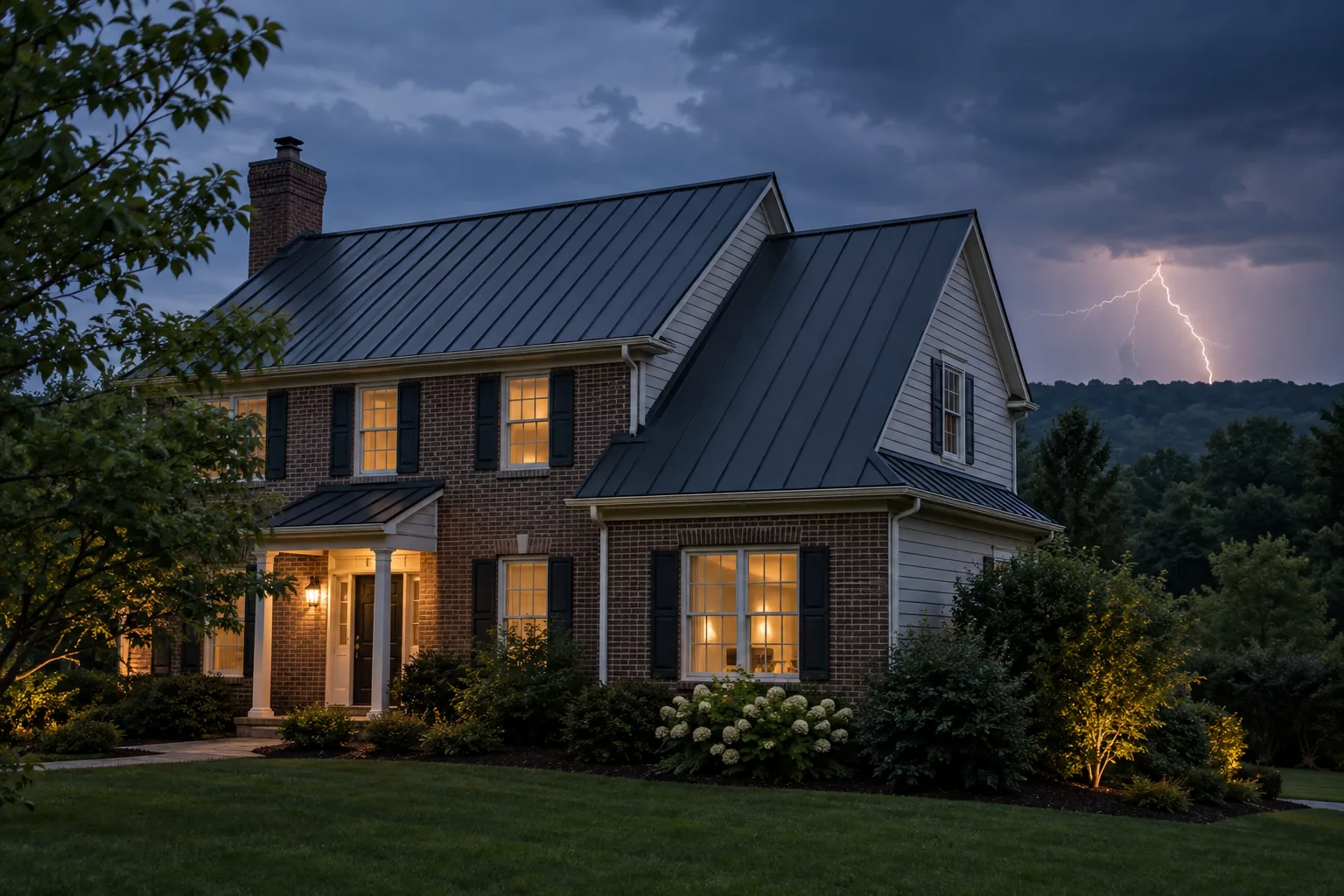
Myth 1: Metal roofs attract lightning
Busted: A metal roof does not make a building more likely to be struck. The Metal Construction Association explains that roof material does not increase strike risk. Height, geometry, isolation, and surrounding topography are more relevant to where lightning connects.
Metal does conduct electricity, but conduction and attraction are different ideas. Metal is also noncombustible. If lightning protection is appropriate, it must be designed as a complete path with air terminals, conductors, bonding, and grounding—not assumed from the roof panels alone. Any requirement must be verified for the specific building: [VERIFY: current requirement].
Do not add makeshift grounding to a roof. Lightning protection design belongs with qualified professionals who can evaluate the building and current standards. The roofing contractor should coordinate penetrations and attachments so the weathering system remains intact.
Myth 2: Rain makes every metal roof loud
Busted: Interior sound depends on the whole roof and ceiling assembly. A barn panel installed over open framing behaves differently from residential metal installed over solid decking, underlayment, attic space, insulation, and finished ceilings. The Metal Construction Association notes little difference from other materials when typical roof and attic insulation are present.
Fastener security and panel movement also influence noise. A loose component can rattle, while an assembly designed and installed for thermal movement should remain controlled. Ask the estimator to describe the deck, underlayment, insulation, panel attachment, and attic conditions rather than promising silence from the panel alone.
If sound is a priority, discuss it before the contract. Retrofitting an occupied house after installation is harder than specifying the assembly clearly at the start.
Myth 3: Metal roofs inevitably rust
Busted: Modern roof panels use metallic coatings, paint systems, or naturally durable metals to manage corrosion. Performance still depends on the exact metal, coating, cut edges, fasteners, sealants, drainage, and exposure. The word “metal” covers several very different products.
Scratches, incompatible metals, trapped debris, standing water, and coastal or chemical exposure can change the risk. IBHS notes that coating damage or flaking after impact can create a corrosion concern. That is different from claiming every dent or every exposed panel will rust.
Ask for the panel substrate, coating system, finish, manufacturer care instructions, and compatible accessories in writing. Keep those records for future maintenance and repairs. A mismatched replacement screw or flashing can create problems even when the original panel remains sound.
Myth 4: You cannot walk on a metal roof
Busted: Some metal roof systems can support trained access when the manufacturer’s instructions, support locations, footwear, weather, and fall protection are followed. That does not make every panel or roof area a safe walking surface. Panels can be slippery, and unsupported areas can deform.
Homeowners should not climb onto the roof to test walkability. Roof access belongs to trained workers with the right safety plan. If HVAC service, chimney work, or solar maintenance will require access, identify those routes during design and consider walkways or protected service paths.
Foot traffic can leave cosmetic marks even when it does not cause a leak. Maintenance records should identify who accessed the roof and why. That helps distinguish service-related marks from later weather observations.
Myth 5: Metal roofing is too heavy for a house
Busted: Many metal roofing systems are relatively lightweight, but no material should be approved by assumption. Panel type, substrate, clips, underlayment, existing layers, snow design, and the roof structure all matter. A reroof-over-existing approach also adds the weight of materials that remain.
The evaluation should confirm the existing deck and framing condition and the intended attachment. A lighter covering cannot correct rotten decking or an inadequate structure. If the project changes loads or assembly behavior, the applicable design and permitting requirements need project-specific verification.
Ask the proposal to state whether old roofing will be removed and what happens if damaged decking is found. That scope matters more than a general statement that metal is light.
Myth 6: Hail dents always mean the roof failed
Busted: Hail can dent metal without automatically compromising water shedding. IBHS says small dents may be aesthetic while coating cracks, flaking, seam damage, punctures, or displaced components deserve closer evaluation. Product profile, metal thickness, substrate, hail characteristics, and impact location affect the result.
A cosmetic change can still matter to an owner. Some insurance policies may treat cosmetic metal-roof damage differently or contain a cosmetic exclusion. Review the policy with the insurer before assuming a dent will be handled in one way. The related guide on impact-resistant roofing and cosmetic exclusions explains why product choice and policy language should be reviewed together.
After hail, document visible conditions from the ground and request an assessment. Do not climb onto wet or dented panels. Keep the inspection focused on functional details as well as appearance, and leave coverage decisions to the insurer.
Myth 7: Every metal roof looks industrial
Busted: Standing seam panels can create clean vertical lines on traditional or modern homes, and other metal profiles can resemble shingles, shakes, slate, or tile. Color, seam height, panel width, roof geometry, trim, gutters, and wall materials determine much of the final appearance.
Neighborhood context and association rules still matter. Review the exact profile and color with the HOA before ordering if approval applies. Small samples can help compare finish, but photographs of similar completed roof shapes provide better scale than a chip alone.
Ask to see full-panel details at eaves, rakes, ridges, valleys, dormers, and penetrations. The trim design often has as much visual effect as the flat panel field. A material that looks refined on a simple gable may feel busy on a roof with many intersections.
What the seven myths leave out
A metal roof is a system, not a sheet of metal. The deck, underlayment, ventilation, clips or fasteners, panels, seams, flashings, closures, sealants, penetrations, and edge details have to work together. Product claims cannot compensate for incomplete detailing.
| Concern | What controls it | What to request |
|---|---|---|
| Lightning | Building location, geometry, and any designed protection system | Qualified lightning-protection review when appropriate |
| Rain noise | Deck, underlayment, insulation, attic, ceiling, and secure attachment | Written assembly description |
| Corrosion | Metal, coating, compatible accessories, drainage, and exposure | Product and finish data |
| Walkability | Panel support, manufacturer instructions, access plan, and safety controls | Designated service routes |
| Weight | Complete assembly and existing structure | Removal scope and deck assessment |
| Hail | Panel profile, substrate, impact, seams, and coating condition | Functional and cosmetic findings kept separate |
| Appearance | Profile, color, width, trim, and roof geometry | Full details and HOA approval where applicable |
Start with the building, not the myth. Compare standing seam metal roofing with the other roofing materials we install using the same design goals. If the existing roof is near the end of its useful condition, ask how roof replacement in Northern Virginia would address decking, ventilation, flashings, and drainage.
Review written coverage rather than assuming a material reputation equals a warranty. Product, finish, workmanship, weather events, maintenance, and cosmetic changes may be handled differently. Read roofing warranties explained and request the specific documents before choosing a system.
Questions to put in the estimate
- What exact panel, metal, coating, profile, width, seam, and attachment are proposed?
- Will the old roof be removed, and how will the deck be evaluated?
- How are valleys, sidewalls, chimneys, vents, ridges, eaves, and rakes detailed?
- What underlayment, ventilation, insulation, and sound-control assumptions apply?
- How will future service access avoid panel damage?
- Which product, finish, and workmanship documents will be delivered?
Ask how changes will be approved if concealed conditions appear after removal begins. The contract should describe the decision process for damaged decking, hidden flashing problems, or an unexpected roof layer. It should also identify who coordinates chimney, solar, electrical, or mechanical work that is outside the roofing scope.
Before ordering, compare a full-size sample or installed panel in outdoor light. Confirm the finish code, not just a color name, and place accessory colors in the same written selection. Delivery labels and completion photographs should remain with the final project file.
The answer to each myth becomes more useful when it leads to a clear scope. That scope should show how the roof will perform on this house, not simply repeat broad claims about metal.
Frequently Asked Questions
Does a metal roof need special grounding because of lightning?
A metal roof alone is not a complete lightning-protection system. The need for air terminals, conductors, bonding, and grounding depends on a qualified evaluation and current requirements for the building. Do not add a makeshift connection. Coordinate any designed protection with the roofing details so attachments remain weather-tight.
Will a standing seam metal roof be loud inside my house?
Not necessarily. Interior rain noise depends on the roof deck, underlayment, attic space, insulation, ceiling, panel attachment, and building layout. A residential assembly over solid decking behaves differently from exposed barn panels. Ask for the complete proposed assembly and discuss sound expectations before signing the contract.