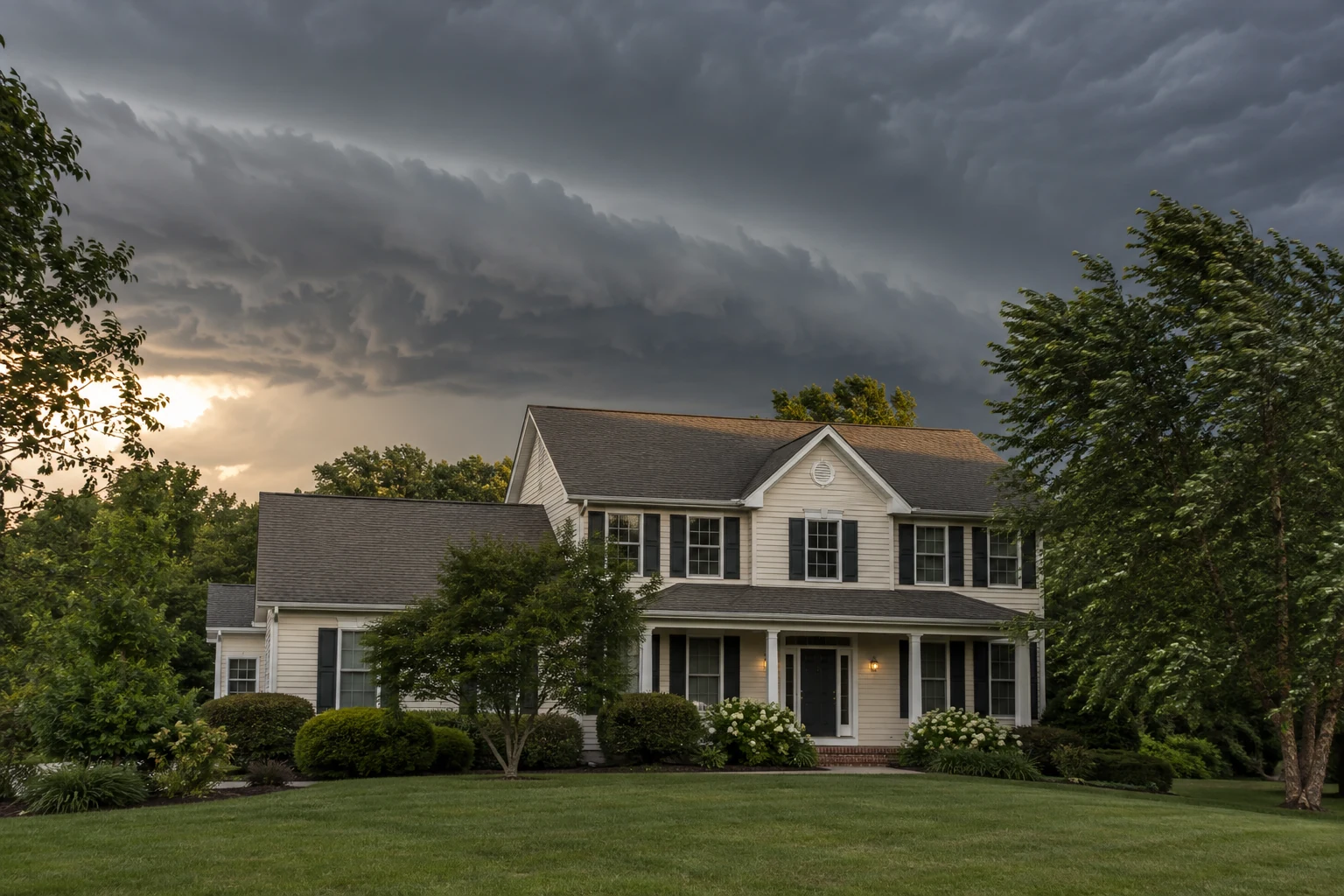
Summer storms and roof wind damage in Northern Virginia
A fast storm can leave an uneven pattern of roof damage. One slope may look normal while a rake edge has missing shingles or a ridge cap sits out of place. For homeowners in Sterling, Ashburn, Leesburg, and nearby Northern Virginia communities, the useful question is what changed on the building and what needs attention.
Start with the condition of your own roof. A neighbor's missing shingles can justify a careful look, but they do not establish damage at your house. Likewise, a quiet interior does not prove the roof escaped harm. Keep observations separate from conclusions until the roof has been assessed.
Summer thunderstorms, straight-line winds, and tropical remnants
Summer thunderstorms develop when moisture, unstable air, and lift come together. Daytime heating can help trigger that process, although storms are not limited to the afternoon. The National Weather Service explanation of thunderstorm development describes those ingredients. Follow the forecast for your location rather than assuming a clear morning means a quiet evening.
Straight-line winds are thunderstorm winds without the rotation of a tornado. A downburst sends air downward and then outward along the ground, which can produce damaging winds. A derecho describes a widespread, long-lived thunderstorm wind event; it is not a label for every strong gust. These distinctions come from the National Weather Service wind guidance.
A roof does not need to be in a tornado to need attention afterward. Also, a homeowner cannot identify a derecho by looking at displaced shingles. Let weather authorities classify the event while the roof assessment documents the building's condition. Avoid assigning an exact wind speed from a photograph or a patch of missing material.
Tropical systems and their remnants bring a different forecasting concern. Rain can remain important even after a system weakens, and inland locations can experience damaging weather far from the coast. The National Weather Service hurricane safety guidance identifies inland flooding, destructive winds, and tornadoes among tropical cyclone hazards. A lower category or a changed storm label does not settle the question of local risk.
For a Northern Virginia home, that means watching the local forecast through the entire event. Avoid using a coastal landfall location as your only planning reference. Save relevant alerts and the approximate time you noticed a problem, then compare those notes with inspection findings.
Manufacturer wind ratings versus wind at your roof
A shingle wind rating, a limited wind warranty, and a weather observation describe different things. A test classification describes performance under a defined method. A warranty describes a manufacturer's written coverage and conditions. A nearby weather station describes conditions measured at its own location.
None of those items, by itself, is a report on your finished roof. Ask for the exact shingle name and the applicable documentation before comparing quoted wind claims. Do not let a number printed in a sales brochure replace an explanation of the full installation.
GAF's residential warranty comparison makes coverage dependent on the product, accessories, installation, and applicable restrictions. Some eligible systems offer a limited wind warranty without a maximum wind speed limitation. That wording is not a promise that a roof cannot be damaged, and it does not make every GAF installation eligible.
When reviewing a proposal, have the contractor identify the starter shingles, ridge caps, underlayment, and fastening instructions that apply. Keep that information with the contract and product records. For broader context, read roofing warranties explained before treating a warranty headline as a complete description of protection.
FEMA identifies improper installation and poor shingle seal condition as frequent contributors to asphalt shingle wind damage in its windstorm resilience recommendations. This is why the inspection should examine installation details and condition as well as missing shingles. A product label cannot show how every part of an existing roof was installed.
Examples of manufacturer wind coverage
| GAF product group | Published wind coverage | Condition to check |
|---|---|---|
| Royal Sovereign shingles | 60 mph | Applicable installation and warranty terms |
| GAF lifetime shingles in the limited warranty table | 110 mph without special installation; 130 mph with special installation | Product-specific fastening and accessory conditions |
These examples come from the GAF Shingle & Accessory Limited Warranty. They describe coverage, not the speed at which shingles begin to fail. There is no reliable speed-to-damage lookup for an individual roof: seal condition, fastening, roof shape, exposure, and debris also matter. A lower measured gust does not rule out damage, and an exceeded rating does not by itself document a loss.
Roof areas that deserve a closer look after wind
Use this table to organize observations from a safe location. It is a guide to what to report, not a method for declaring the cause or extent of damage. A contractor can explain what is visible, what requires closer access, and what remains uncertain.
| Roof area | What you may notice safely | What to ask the inspector |
|---|---|---|
| Ridges and hips | A changed roof outline or displaced cap shingles | Are caps and adjacent details secure and intact? |
| Rakes and eaves | Missing edge shingles or material hanging loose | What is the condition of starters, edges, and attachments? |
| Windward roof areas | An obvious change on the side facing the storm | Has the assessment also covered the remaining slopes? |
| Previous repairs | A patch that looks different after the storm | Is there evidence of a new change at the repair boundary? |
| Flashing and roof penetrations | A shifted metal detail visible from the ground | Does the detail need repair or further investigation? |
Ridges, rakes, and eaves deserve attention because the transitions and attachments matter. FEMA's Hurricane Ike assessment discusses shingle damage beginning at roof perimeter and hip or ridge areas. Those observations explain an inspection priority; they do not establish that every edge condition on a Virginia roof came from the latest storm.
The windward side is a starting point for observations, not a boundary for the inspection. Tell the contractor which direction the storm appeared to approach, if you know, but avoid limiting the assessment to that side. Ask for findings organized by slope so the report clearly shows where each condition was found.
Previous repairs should be identified before inspection whenever records are available. A color difference can simply reflect an older repair, while a newly displaced piece deserves closer review. Share dated photographs and invoices so the contractor can compare the current condition with the known history.
GAF notes that some storm-related effects may be less obvious than missing material, including cracks, exposed mat, and weakened self-seal integrity. Its storm-damaged shingle bulletin supports taking a careful look beyond obvious blow-offs. It does not make every crack or loose shingle proof of storm damage.
After-the-storm checklist for Northern Virginia homeowners
- Wait for safe conditions. Follow official warnings and remain sheltered while hazards continue. Keep away from downed lines, unstable branches, and damaged structures. The National Weather Service wind safety guidance puts personal safety ahead of property checks.
- Look from the ground. Use a clear viewing position and a camera zoom if helpful. Photograph the overall roof before focusing on a detail. Record only what you can see safely; a hidden slope belongs on the inspection list.
- Check occupied rooms. Note new stains, dripping, or changes around ceilings and walls. Keep people away from sagging ceilings and electrical hazards. Do not enter an unsafe attic or attempt to trace a leak through a hazardous space.
- Write a short timeline. Record when the storm passed, when you first noticed the issue, and whether it changes during later rain. Keep original photographs with their dates. Describe a wet ceiling as a wet ceiling rather than assigning a cause you cannot verify.
- Collect existing roof records. Gather the installation date if known, product paperwork, prior repair invoices, and older photos. Mark unknown information as unknown. These records help distinguish a new observation from an existing condition.
- Request a documented assessment. Explain visible changes and any active water entry when arranging a storm damage roof inspection. Ask which findings need prompt work and which need additional investigation.
Before agreeing to permanent work, request photographs and a written scope. The scope should identify the affected areas and describe what the proposed work addresses. If someone recommends a full replacement, ask which observed conditions make a smaller repair unsuitable.
Keep a separate record of any temporary work, including photographs before and afterward when available. Ask how that work relates to the permanent repair plan. The immediate need to address water entry should not leave you without a clear description of what was done.
Choosing a repair plan after a summer storm
The extent of visible damage is only part of the decision. Ask whether surrounding material can support the proposed repair and whether the leak source has been identified. A written explanation is more useful than a recommendation based only on the number of shingles seen in the yard.
For a localized condition, roof repair in Northern Virginia may be the appropriate service to discuss. Have the contractor identify the area to be repaired, the materials involved, and any limits to the work. Avoid treating an estimate as a guarantee about portions of the roof that have not been inspected.
If multiple options are offered, compare them against the same problem statement. One option may address a specific opening, while another involves a larger area. Ask what evidence supports each scope and which unanswered questions could change the recommendation.
Give insurance questions to your insurer and keep the roof discussion focused on observed conditions and proposed work. A roofing report can document the building, but it cannot establish a policy outcome. Store the estimate, photographs, product details, and completed-work records together so you can find them later.
After repairs, keep the completion paperwork and note any follow-up instructions. If a stain changes or water appears again, report the location and timing rather than assuming the original problem has returned. Clear records make the next conversation more specific and help keep the repair plan tied to evidence.
Frequently Asked Questions
Can straight-line winds damage a roof without a tornado?
Yes, straight-line thunderstorm winds can damage a roof without a tornado. The National Weather Service distinguishes these winds from rotating tornado winds. After a storm in Northern Virginia, document visible changes from the ground and have questionable areas assessed. Missing shingles alone do not identify the storm type or establish the exact wind speed at the house.
Does a high shingle wind rating mean my roof cannot lose shingles?
No, a high wind rating does not guarantee that a finished roof cannot lose shingles. Product testing, installation condition, and warranty terms answer different questions. Ask for the exact shingle and accessory documentation, then have the roof's actual condition evaluated. A nearby recorded gust also does not describe every force experienced by each roof detail.
What should I do first if my roof looks damaged after a summer storm?
First, stay sheltered until conditions are safe and keep away from downed lines or unstable debris. Then record visible changes from the ground and note any interior water entry. Arrange a professional assessment and request photographs with the proposed work. Do not try to reach roof surfaces to confirm a suspicion or retrieve loose material.