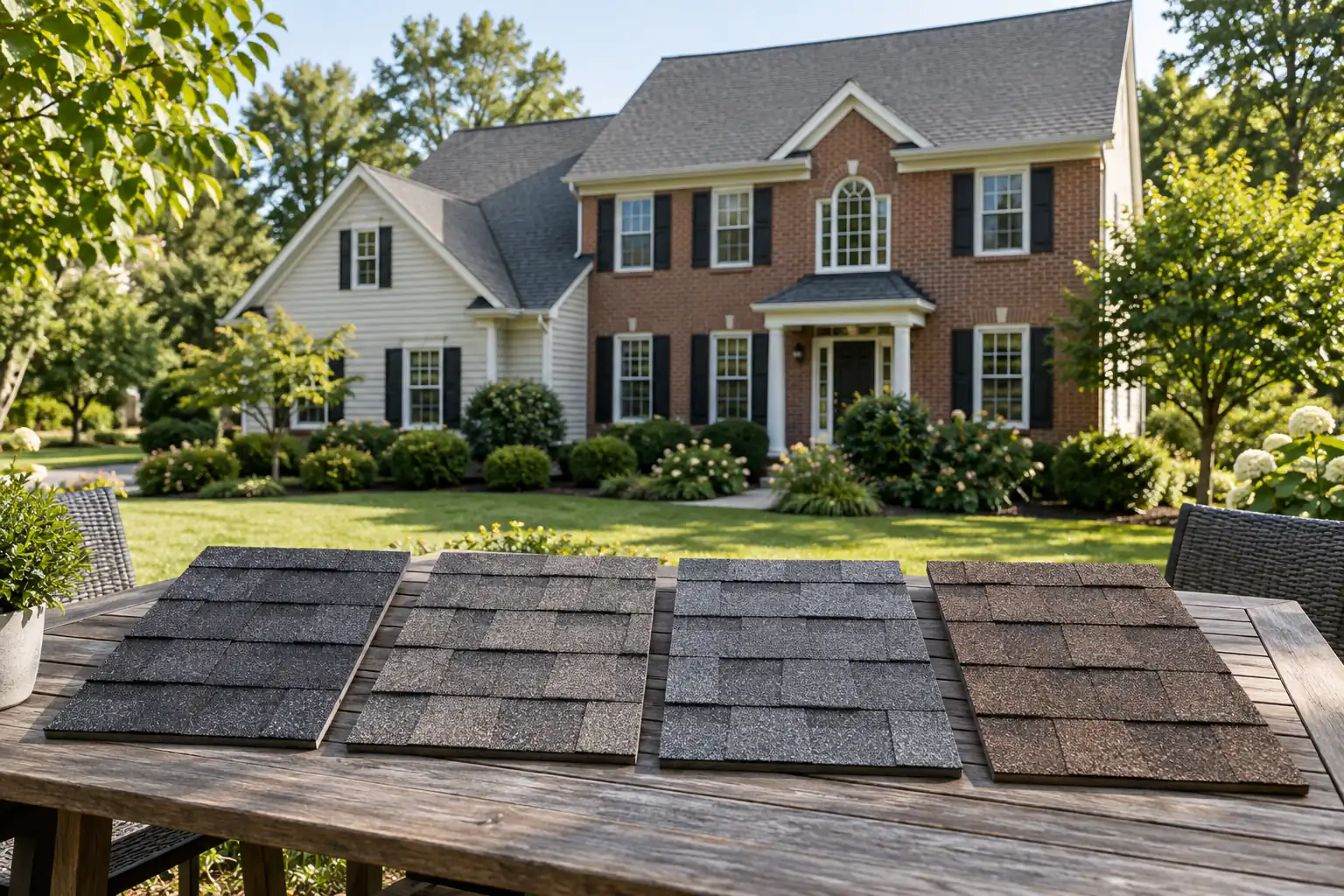
Roof color and heat absorption
Color changes how a roof looks and can affect how much sunlight its surface absorbs. ENERGY STAR explains that lighter or more reflective roofs generally stay cooler than surfaces that absorb more sunlight. Product reflectance and thermal emittance describe performance more precisely than a color name alone.
Do not turn that principle into a promised energy saving. Northern Virginia has both heating and cooling seasons, and the result depends on roof orientation, shade, insulation, ventilation, air sealing, HVAC efficiency, and the exact roofing product. Two gray shingles can have different tested properties.
Ask for the product data if surface temperature or cool-roof performance matters to the project. Then review the roof as part of the full enclosure. A lighter color does not fix missing insulation or poor attic ventilation, and a dark color does not automatically make an otherwise well-designed home uncomfortable.
On a heavily shaded lot, algae staining and leaf debris may influence color maintenance more than theoretical reflectance. Under strong sun, a very dark roof can create a sharper visual contrast. The choice should account for both performance information and the real exposure of the house.
Start with fixed exterior materials
Roofing usually lasts longer than an exterior paint cycle, so begin with materials that are difficult or expensive to change. Brick, stone, permanent siding, chimney masonry, and major metalwork provide the strongest color cues. Paint, shutters, and doors can follow later.
Identify whether those materials lean warm, cool, or neutral. Red and brown brick often pair with warm gray, brown, or blended roofs. Blue-gray stone and cool siding often pair with charcoal or slate tones. These are design starting points, not rigid rules.
Compare undertones rather than relying on names such as “weathered wood” or “pewter.” Manufacturer names are not standardized color measurements. Place samples beside the brick or siding in daylight and look for a repeated tone that ties the surfaces together.
Roof complexity matters too. A roof with many gables and dormers occupies more of the front view, so a high-contrast blend can appear busier at scale. A simple roof plane can tolerate more visual texture without competing with the facade.
HOA palette constraints and how to check yours
An association may control product line, color family, visible profile, or submittal procedure. Do not assume that a neighbor's roof proves your choice is approved; rules and product availability can change, and older roofs may have been accepted under a different list.
- Request the current documents. Get the architectural guidelines, approved palette, application form, and meeting or review schedule.
- Confirm the exact product. Record manufacturer, product line, color, profile, and any accessory colors the association requests.
- Submit representative material. Provide the current sample, manufacturer sheet, and exterior photo if required.
- Wait for written approval. Do not order a nonreturnable roof color based on a verbal comment.
- Keep the approval. Save it with the roofing contract and product records.
The applicable HOA procedure is property-specific: [VERIFY: current requirement]. Ask the roofer how substitutions will be handled if the approved color becomes unavailable. A replacement product should go back through the required review rather than being treated as close enough.
For association-managed properties, HOA and condo association roofing may involve coordinated samples, consistent streetscape decisions, and phased work. One homeowner's color decision can affect a larger set of buildings.
Resale and curb appeal
A roof color influences the first view of the home, but no universal color guarantees a resale return. Neutral, coordinated choices can make the exterior easier to understand, while a strong contrast may emphasize roof shape. The condition and installation quality of the roof remain separate from its color.
Think about likely paint changes during the roof's service period. A neutral roof can work with several future wall colors. A highly specific blend may look ideal with the current facade but limit later choices.
Photograph the house from the street, driveway, and backyard. Mark how much roof is visible from each location. A low-slope roof seen mostly from the curb has less color impact than a steep roof that dominates the front elevation.
Gutters, downspouts, fascia, and metal flashings also contribute to the finished view. Decide whether they should blend with the roof, match trim, or create a deliberate edge. Small disconnected color decisions can make an otherwise coordinated roof look unfinished.
Matching neighbors versus standing out
Neighborhood context helps a roof feel intentional. Walk the block from the ground and note broad color families, not exact brands. A related neutral can fit the streetscape without copying the house next door.
Standing out works best when the home's architecture already supports the choice. A dark standing seam roof can create a crisp contrast on a light farmhouse, while a blended shingle may suit a brick colonial. The same color can read differently on different roof forms.
Avoid selecting solely from a trend photo. Camera processing, screen settings, season, landscaping, and exposure can shift the appearance. Use inspiration to narrow options, then return to physical samples at the actual property.
If the neighborhood contains many mature trees, consider how shade and falling debris change the view. A roof may look much darker beneath foliage than it does in an open manufacturer photograph. Observe the house during both direct sun and shade.
Why color looks different at scale
A sample board never reproduces the full visual effect of thousands of shingles across a roof. At distance, individual granules and tabs blend into a field color. Shadow lines, roof pitch, orientation, and daylight shift what the eye perceives.
GAF warns that computer and phone screens can represent colors differently and recommends physical samples. Go beyond a small chip when possible. Use a large board or several full shingles, and view them beside the house rather than flat on an indoor counter.
Move the sample to more than one side of the home. Morning light may warm an east-facing sample, while late light changes a west-facing plane. Overcast daylight can reveal undertones that bright sun hides.
Ask for nearby examples of the exact product and color, but remember that age and lighting alter the view. Do not treat a photograph of a different product line as proof of the final result. Blends with similar names can use different granule patterns.
| House feature | Color direction to test | Risk to watch |
|---|---|---|
| Red or brown brick | Warm gray, brown, or blended neutrals | Undertones that clash with mortar or brick |
| Cool gray or blue siding | Charcoal, slate, or cool gray | A warm blend reading orange in sun |
| Light siding with dark shutters | Medium or dark neutral | Too much contrast on a very large roof |
| Complex roof with many planes | Quieter blend or lower contrast | A busy pattern becoming dominant |
| Heavy tree shade | Mid-tone sample viewed on site | Color appearing darker; visible organic staining |
| Standing seam design | Finish coordinated with trim and masonry | Panel and trim colors being selected separately |
Compare the exact roofing material
Color is tied to product. Start with the roofing materials we install, then compare the available colors within the system that fits the roof. A color preference should not push the project into an unsuitable material or assembly.
For asphalt shingle roofing, compare blend, shadow line, tab pattern, and exposure. Confirm that the sample and order refer to the same product line. Ask how ridge caps and starter materials will coordinate.
For standing seam metal roofing, compare finish sheen, seam spacing, rib height, trim, snow or rain accessories, and adjacent metals. Large smooth panels can reflect sky and trees, so finish appearance changes through the day.
If replacement is planned, keep the approved product and color in the contract. Photograph the label on the delivered material before installation begins. Clear records reduce confusion if packaging uses similar color names.
A five-view decision method
- View the sample against brick, stone, and siding in open shade.
- View it in direct morning or afternoon sun without relying on a screen.
- Stand at the street and judge how much roof controls the elevation.
- Compare the choice with nearby roofs and the HOA palette.
- Confirm the exact manufacturer, line, color, and accessory match in writing.
Do not rush the order because a small sample looks acceptable indoors. A roof color covers a large permanent surface. A deliberate outdoor review is a small step compared with changing a completed roof.
Frequently Asked Questions
Does a lighter roof color keep a Virginia home cooler?
A lighter or more reflective surface generally absorbs less solar energy, but the indoor result depends on the exact product, insulation, ventilation, air sealing, roof exposure, and HVAC system. Ask for tested product properties when heat performance matters. Do not rely on the marketing name of a color alone.
Should a roof color match the neighbors?
It should usually relate to the neighborhood without needing to copy the nearest house. Compare broad color families, roof forms, and permanent exterior materials. HOA rules may narrow the choice. A coordinated neutral can fit the streetscape while still giving the property its own clear, intentional appearance.
How large should a roof-color sample be?
Use the largest current physical sample available, ideally several full shingles or a large panel, and view it beside the house. Check it in sun, shade, and different directions. A small indoor chip or phone image cannot reproduce the blended color, shadow lines, and scale of a completed roof.