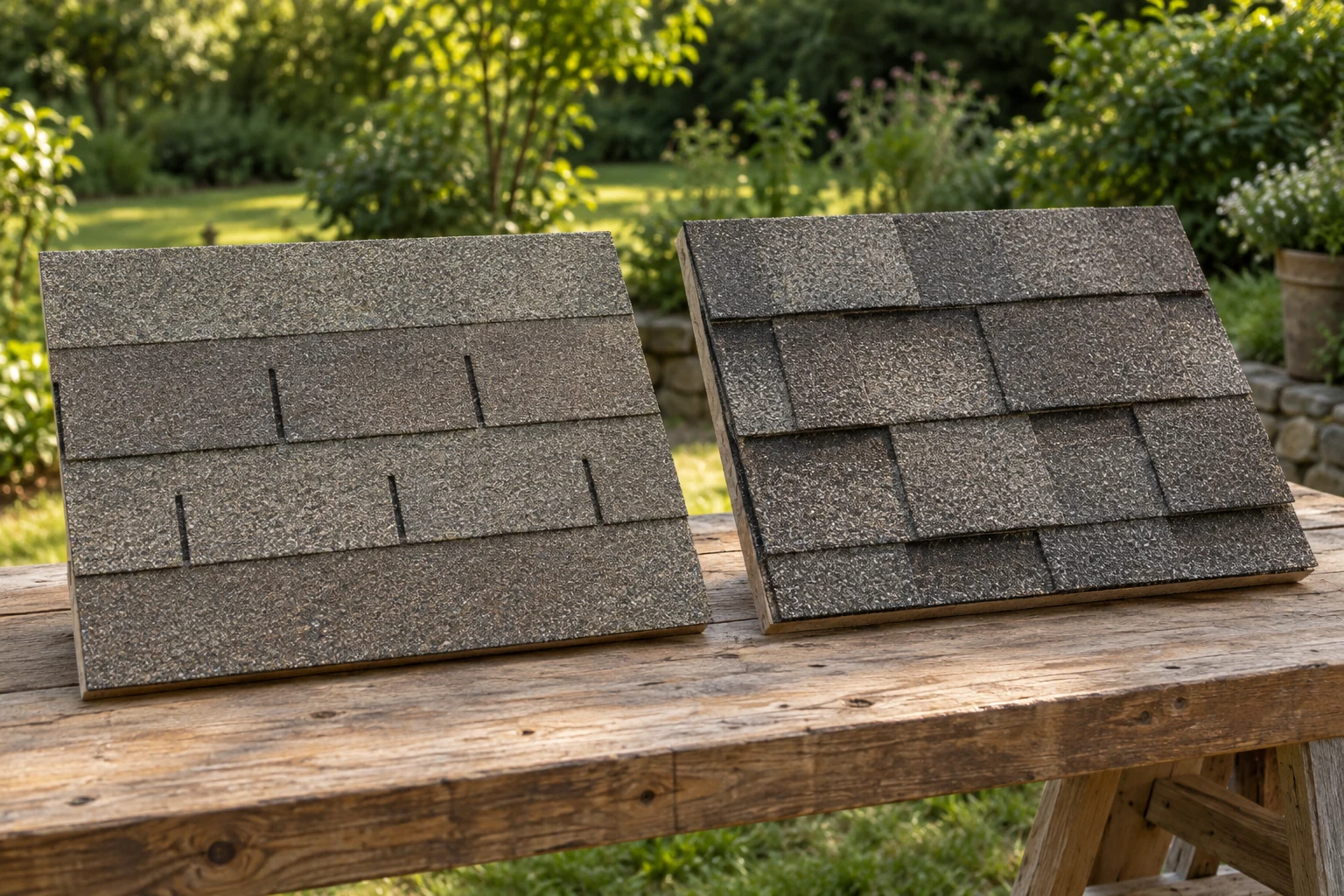
Architectural vs 3-tab shingles: what changes?
Both options are asphalt shingles, but they create different roof surfaces. GAF describes 3-tab shingles as single-layer products with a flat, uniform pattern. Architectural shingles have multiple layers laminated together, creating more depth and variation. Dimensional, laminate, and architectural commonly describe this same broad shingle category.
The word architectural does not identify one specific product or guarantee a particular result. Two shingles in that category can have different warranty terms, colors, accessory requirements, and installation instructions. A useful estimate names the actual shingle instead of stopping at a category label.
GAF presents architectural shingles as a popular roof replacement choice. That helps explain why you encounter them in product catalogs, but it does not establish their market share in Sterling, Ashburn, or elsewhere in Virginia. Choose a product for your roof and ownership plans, rather than an unsupported claim about what everyone nearby installs.
Start with the asphalt shingle roofing options available for the project, then compare written scopes for the same roof. The visible shingle is only part of the decision. An attractive sample does not answer questions about decking, flashing, or the work included in the price.
Compare appearance, wind coverage, lifespan, cost, and warranty
| Decision point | Architectural shingles | 3-tab shingles |
|---|---|---|
| Construction and appearance | Laminated layers create depth and an irregular shadow pattern. | A single layer creates a flatter, regular tab pattern. |
| Wind comparison | Coverage depends on the named product and installation conditions. | Coverage also depends on the product; do not assign one category-wide rating. |
| Lifespan planning | Evaluate installation, exposure, and condition before adopting a service-life assumption. | Request product-specific planning evidence; a warranty term is not a replacement schedule. |
| Relative cost | Ask for the complete installed total and the upgrade difference. | Do not assume this option produces the lowest complete project price. |
| Warranty | Check manufacturing defects, wind, algae, labor, and transfer provisions separately. | Check those same provisions against the exact product offered. |
| Potential fit | A homeowner seeking a dimensional appearance and suitable product-specific coverage. | A project with a verified matching need and a suitable written scope. |
Use the table to organize questions, not to award a winner before seeing the roof. Your preferred appearance may be clear immediately. The performance and price comparisons need supporting documents.
Wind coverage belongs to the product and installation
A manufacturer warranty can show a meaningful difference between individual shingles. GAF's published Shingle & Accessory Limited Warranty lists Royal Sovereign wind speed coverage at 60 mph. Its table lists certain lifetime shingles at 110 mph without special installation and 130 mph with special installation, subject to the document's conditions.
These are warranty coverage figures, not a promise that a roof survives every storm below that speed. Coverage depends on the applicable product, required installation, exclusions, and claim conditions. Do not turn a manufacturer's wind figure into a local building requirement or a prediction for your house.
Request the warranty document that applies to the quoted product and installation date. Ask the contractor to identify the accessory combination and installation details supporting the quoted coverage. If the proposal only says improved wind resistance, request a more specific explanation.
A useful comparison question is: what exactly is different between these two written systems? If the response changes the shingle, accessories, and warranty together, ask for each change to be identified. That makes it easier to understand what the additional cost buys and what remains outside coverage.
Lifespan is not the number printed on a warranty
Ask how the proposed product and the conditions on your Virginia roof affect service-life planning. A category label alone does not establish a reliable replacement date. A quoted warranty term describes coverage under a contract; it does not tell you the year a roof will require replacement.
GAF identifies installation quality, materials, location, weather exposure, and attic ventilation among the factors affecting roof life. That supports evaluating the whole roof before choosing a replacement schedule. It does not establish a fixed advantage for every architectural product over every 3-tab product.
For a long-term budget, ask for the reasoning behind any proposed service-life assumption. The response should identify the named product, your roof's conditions, and the maintenance assumptions. Keep an optimistic planning case separate from a conservative case, and label both as assumptions.
[OWNER: provide manufacturer-supported, product-specific lifespan guidance if numerical ranges are to be published.] Until that evidence is available, compare what is documented: product construction, installation scope, coverage, and inspection findings. An unsupported lifespan estimate can make an otherwise useful cost comparison misleading.
Installed cost matters more than the bundle price
Compare complete proposals on the same scope. A lower shingle price does not establish a lower roof replacement price because the project also includes preparation, labor, accessories, and disposal. Product availability and the actual work specified can affect the final comparison.
Ask for a base scope covering tear-off, decking assessment, underlayment, flashing, ventilation review, and cleanup. Then request the price difference between the two named shingle options. Identify allowances or unit prices for work that cannot be measured until the old covering is removed.
[OWNER: provide current installed pricing for the specific architectural and 3-tab products, with scope, measurement basis, and exclusions.] Ask for the actual upgrade difference rather than applying a generic percentage premium. A recent written estimate for your property provides a better basis than a generic online cost chart.
Review the total, payment timing, and what triggers a change order. If one proposal excludes an item the other includes, resolve that difference before comparing the totals. An inexpensive-looking bid becomes difficult to evaluate when important parts of the scope remain unstated.
When architectural shingles fit the decision
Architectural shingles are worth comparing when the roof is a major part of the home's appearance and you prefer a more varied surface. Look at samples beside the siding, brick, trim, and gutters. Review the overall pattern from the ground instead of deciding solely from a close-up sample.
They also deserve consideration when the quoted product offers documented coverage you value. Keep that discussion specific: name the shingle and warranty, and identify the installation conditions. The category name by itself does not establish an impact rating, storm outcome, or maintenance requirement.
For an owner planning to remain in the home, the decision may place more weight on appearance and coverage than on a small difference in initial cost. That is a personal budget choice. It is not evidence that a particular upgrade will repay its cost at resale.
When 3-tab shingles still deserve consideration
A suitable 3-tab product may fit a rental property with a defined maintenance budget, a shorter ownership plan, or a project seeking an existing visual pattern. None of those situations automatically makes it the cheapest or best option. The roof still needs a suitable product and a complete installation scope.
For a rental, consider how the proposal handles future service records and unexpected work. For a planned sale, consider the documentation a buyer can review. A clear installation invoice and applicable warranty may be more useful to a decision than an unsupported claim about added property value.
A matching project needs more than a familiar color name. Ask whether the actual product is available, whether its dimensions and pattern suit the work, and how a new section may look beside aged material. A photograph can help begin the conversation, but it cannot settle every compatibility question.
If matching an HOA-approved roof style is part of the decision, obtain the association's current written direction. [VERIFY: current requirement] Confirm any approval process, accepted materials, colors, and submission rules for the specific property before ordering. Do not assume that matching the existing roof eliminates review.
Read the warranty as a set of separate promises
Manufacturing-defect coverage, wind coverage, algae coverage, and installation workmanship address different issues. Ask which written document covers each one and which party is responsible. A long headline term is not a substitute for reading what the document includes.
GAF's published warranty distinguishes its limited term from an initial protection period and provides different terms for different products. Some lifetime coverage also has eligibility conditions. Review the actual document for your ownership type, especially if the property is a rental or held by an entity.
For a short ownership plan, request the transfer provisions in writing. Check the steps, timing, and limitations before treating transferability as a selling benefit. Keep a copy of the product information and the completed installation documents with the property's maintenance records.
Bring a short comparison sheet to the roof discussion
Write down the product name, color, complete installed total, allowance terms, warranty document, and unresolved questions for each option. Mark items that differ between proposals. This reduces the chance that a material choice gets confused with a difference in scope.
Then ask for a recommendation tied to the property: why does this product suit this roof, and which tradeoffs remain? For roof replacement in Northern Virginia, that explanation should connect the material choice to the documented roof conditions and your plans.
Rain Guard Roofs is based in Sterling and serves a 30-mile radius from its office. A local project discussion can narrow the available options without making promises about lifespan or resale. Review roofing warranties explained alongside the actual product documents so the final decision rests on a comparable written scope.
Frequently Asked Questions
Are architectural shingles the same as dimensional shingles?
Yes, dimensional and laminate commonly refer to architectural asphalt shingles. Their layered construction creates more depth than the flat, repeating appearance of 3-tab shingles. Those names describe a category, so you still need the exact product name to compare installation instructions, colors, wind coverage, and warranty terms for your Virginia roof.
How much longer do architectural shingles last than 3-tab shingles?
A fixed difference cannot be established for your roof from the shingle category alone. Installation, product selection, exposure, and maintenance affect service life, and warranty years are not a lifespan guarantee. Ask for product-specific supporting evidence before using a numerical lifespan difference in a replacement budget or choosing an upgrade on that basis.
Are 3-tab shingles a reasonable choice for a rental or short hold?
They can be, if the named product suits the roof and the complete proposal meets your needs. Compare installed totals, scope, availability, appearance, and coverage instead of assuming 3-tab is cheapest. A short ownership plan also makes warranty transfer terms and clear installation records useful parts of the decision.